Explore Portsmouth’s history through art on a guided bike tour. Discover sculptures, landmarks, and stories that bring the past to life.
- John Paul Jones House, part of the Portsmouth Historical Society - Known as the Father of the American Navy, John Paul Jones resided at the Purcell House while the ships Ranger and America were being constructed for the revolution.
- African Burying Ground Memorial - Just steps away from the John Paul Jones House, this site was once a cemetery…
- John Paul Jones House, part of the Portsmouth Historical Society - Known as the Father of the American Navy, John Paul Jones resided at the Purcell House while the ships Ranger and America were being constructed for the revolution.
- African Burying Ground Memorial - Just steps away from the John Paul Jones House, this site was once a cemetery for both enslaved and free Africans in Portsmouth. Visitors can learn about the history of the black community that contributed to the development of Portsmouth.
- Market Square - Since the mid-1700s, Market Square has been the commercial and community heart of the city, serving as a hub for trade, military training, and housing the State Legislature. The square was paved in 1762 following a public lottery and was rebuilt with brick after a significant fire in 1802. Many historic buildings from that era, including the North Church built in 1854, still stand today. Despite experiencing decline and urban renewal in the mid-20th century, the area was revitalized by developers and now thrives as a center for arts, dining, and heritage tourism. Market Square has remained the city’s main economic and community center since the mid-20th century. A major fire in 1802 destroyed many buildings, but they were swiftly rebuilt in brick, showcasing some of the city’s finest early 19th-century commercial architecture. The North Church, a central landmark, was constructed in 1854 on the site of a meeting house dating back to 1712.
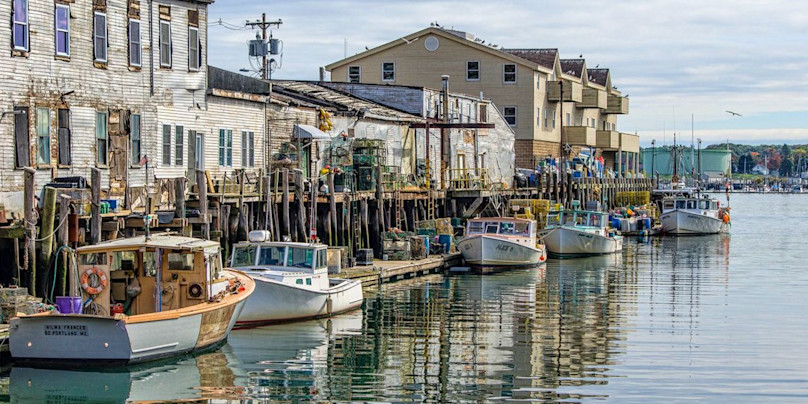
- Prescott Park - The park was the vision of sisters Josie and Mary Prescott, who used a substantial inheritance from their brother to transform a neglected waterfront area of Portsmouth into a public park in the 1930s. The land, previously filled with warehouses and a red-light district, was purchased to create a beautiful public space. In 1954, the sisters’ trust fund officially transferred the park to the city for perpetual use, and it has since become a popular destination for gardens and the annual summer theater festival. Before the park’s creation, the area was a bustling but decaying industrial and maritime hub along the Piscataqua River. By the 1930s, it had become a rundown neighborhood with warehouses, wharves, and a red-light district. Josie and Mary Prescott, who grew up in the neighborhood, dreamed of cleaning up and beautifying the area for public use, using a significant inheritance from their brother, Charles, who had achieved great success in Erie. In 1935, they began purchasing the properties.
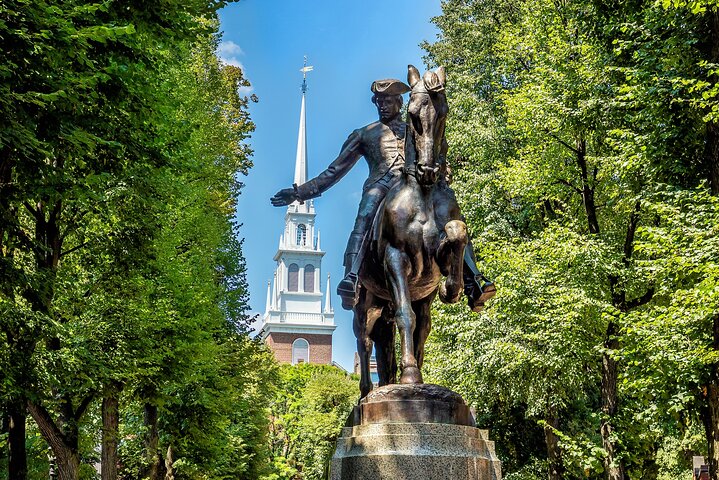
- Haven Park - Fitz John Porter, born in Portsmouth in 1822, was a Civil War hero and a controversial figure. A West Point graduate and Mexican-American War veteran, he rose to the rank of brigadier general and played a key role in training the Army of the Potomac. His career suffered after the Second Battle of Manassas due to accusations of insubordination and his association with General McClellan, leading to a court-martial and dismissal in 1863. He spent years fighting to clear his name, and in 1886, he was exonerated and reinstated to his rank by President Cleveland. Portsmouth honored him with a statue in 1904 and a historical marker at his birthplace.
- Portsmouth - History and technology coexist at the Navy’s oldest shipyard, established in 1800 in Kittery, near Portsmouth. It is the Navy’s oldest continuous shipyard. Initially focused on warships like the USS Washington (1814), it shifted to submarines around WWI and became a center for submarine design post-WWII. Today, it repairs and modernizes the Navy’s nuclear submarines. 1800: Established by President John Adams, the oldest Navy yard. 1814: Launch of USS Washington. 1905: Hosts Treaty of Portsmouth, ending the Russo-Japanese War. WWI: Begins building submarines, including the first at a U.S. Navy yard, L-8. WWII: Workforce exceeds 25,000; builds over 70 submarines. Post-WWII: Becomes a submarine design hub. 1969: Launch of USS Sand Lance, the last public yard submarine. Today: Focuses on overhaul, repair, and modernization of nuclear submarines. Located on Seavey’s Island in Kittery, Maine, despite its name and ties to Portsmouth, New Hampshire—subject to a border dispute, resolved by the Supreme Court.

- Expert Guide
- Expert Guide
- Tips and Gratuities
Embark on a walking adventure with a knowledgeable local guide. Uncover hidden treasures, delve into intriguing history, and enjoy a leisurely 2-hour walk through the most iconic and picturesque areas of Portsmouth, New Hampshire. As the lively summer days draw to a close, it’s time to swap wheels for walking shoes! After a fantastic season of bike…
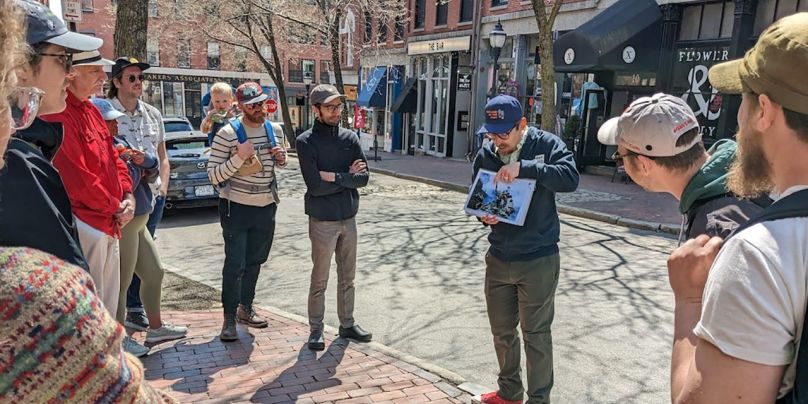
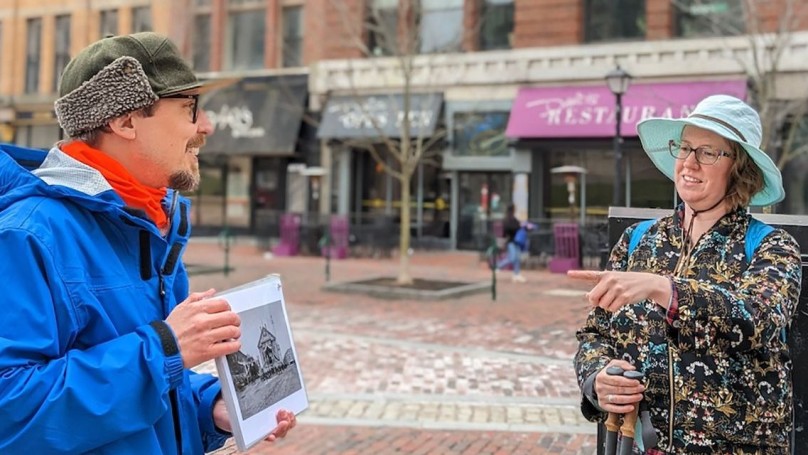
Embark on a walking adventure with a knowledgeable local guide. Uncover hidden treasures, delve into intriguing history, and enjoy a leisurely 2-hour walk through the most iconic and picturesque areas of Portsmouth, New Hampshire. As the lively summer days draw to a close, it’s time to swap wheels for walking shoes! After a fantastic season of bike tours through Portsmouth’s scenic streets and coastal paths, we’re thrilled to slow down and bring our tours to the city’s core on foot. Our guided walking tours provide a personal and immersive way to experience the allure and history of Market Square and beyond.
Why the change? Bike tours are ideal for the warmer months, allowing us to cover more ground and enjoy the waterfront breeze. However, as the air becomes crisp and leaves begin to fall, there’s something uniquely special about strolling through the historic streets, taking the time to admire the architecture, stories, and local culture — one step at a time.
For a full refund, cancel at least 24 hours before the scheduled departure time.