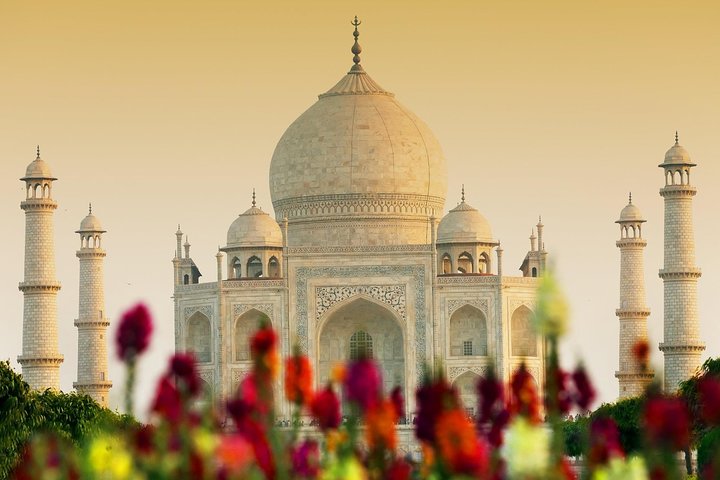
Exploring Agra’s Spiritual Heart: A Family Adventure Through Sacred Sites
Eager to explore the rich tapestry of religious diversity in Agra, I embarked on the Agra Sacred Sites Tour with my family. Join me as I recount our journey through mosques, temples, and more, discovering the spiritual heart of this historic city.


A Journey Through Agra’s Spiritual Tapestry
As a family travel writer, I’m always on the lookout for experiences that can enrich our understanding of the world while being engaging for both adults and children. The Agra Sacred Sites Tour was one such experience that promised to offer a glimpse into the religious diversity of India, and it did not disappoint.
Our day began with a visit to the Jama Masjid, a magnificent mosque built by Shah Jahan in 1648. Standing opposite the Agra Fort, the mosque’s grandeur was a sight to behold. My children were fascinated by the intricate designs and the sheer size of the mosque, which is one of the largest in India. Our guide shared stories of its history and significance, making the experience both educational and captivating for the whole family.
Next, we visited the Balkeshwar Mandir, a Hindu temple dedicated to Lord Shiva. Situated on the banks of the Yamuna River, the temple offered a serene atmosphere that was a welcome change from the bustling city. The kids enjoyed the peaceful surroundings and the opportunity to learn about Hindu rituals and traditions. Our guide was excellent at explaining the cultural significance in a way that was accessible to all ages.
Discovering Agra’s Colonial Heritage
Our journey continued to St. George’s Cathedral, a testament to Agra’s colonial past. This Protestant church, built in 1828, stands as a reminder of the British influence in India. The Gothic architecture was a stark contrast to the Mughal designs we had seen earlier, and it sparked a lively discussion among my family about the diverse architectural styles in Agra.
The cathedral’s history was brought to life by our guide, who shared anecdotes about its role during the British Raj. It was fascinating to see how different communities have left their mark on Agra, and it provided a great opportunity to discuss the importance of cultural preservation with my children.
We then made our way to Dayal Bagh, the headquarters of the Radhasoami faith. The lush gardens and the spiritual ambiance of the place were truly captivating. It was a peaceful retreat where we could reflect on the day’s experiences and appreciate the beauty of Agra’s spiritual diversity.
Embracing Agra’s Spiritual Diversity
Our final stop was the Gurudwara Guru ka Tal, a Sikh pilgrimage site dating back to the 17th century. The gurudwara’s serene environment and the stories of Guru Teg Bahadur Sahib Ji’s journey were inspiring. My children were particularly interested in the community kitchen, where volunteers prepare meals for visitors, embodying the Sikh principle of selfless service.
Throughout the tour, our guide was instrumental in making the experience enriching and enjoyable. Their knowledge and passion for Agra’s sacred sites were evident, and they were adept at engaging with both adults and children.
After a day filled with exploration and learning, we enjoyed a delicious meal at a local restaurant, savoring the flavors of Indian cuisine. It was the perfect way to end our journey through Agra’s sacred sites.
The Agra Sacred Sites Tour was a memorable experience that offered a unique insight into the city’s religious and cultural heritage. It was a day well spent, and I highly recommend it to families looking to explore Agra beyond its famous landmarks. Agra Sacred Sites Tour