Sunrise Over Angkor Wat: A Journey Through Time and Culture
Embark on a journey to Angkor Wat, where the sunrise over ancient temples offers a profound connection to Cambodia’s rich history and culture. Discover the mystical allure of Bayon and Ta Prohm, and immerse yourself in the legacy of the Khmer Empire.


The Enchanting Dawn at Angkor Wat
As the first light of dawn began to break, I found myself standing in awe at the foot of Angkor Wat, the largest religious monument in the world. The air was crisp, and the anticipation of witnessing the sunrise over this ancient temple was palpable among the small group of early risers gathered there. The silhouette of the temple against the gradually brightening sky was a sight to behold, a moment that felt almost sacred.
The experience of watching the sun rise over Angkor Wat is one that transcends mere sightseeing. It is a moment of connection with the past, a chance to reflect on the grandeur of the Khmer Empire and the spiritual significance that this site holds. As the sun’s rays illuminated the intricate carvings and towering spires, I couldn’t help but feel a deep sense of reverence for the artisans who crafted this masterpiece centuries ago.
Our guide, a knowledgeable local with a passion for history, shared fascinating insights into the temple’s construction and its role in Cambodian culture. His stories brought the ancient stones to life, painting a vivid picture of the temple’s past and its enduring legacy.
Exploring the Mystical Temples
After the breathtaking sunrise, our journey continued through the Angkor Archaeological Park, a sprawling complex that covers over 40 square kilometers and houses more than 200 ancient temples. Each temple we visited had its own unique charm and story, from the enigmatic faces of Bayon Temple to the jungle-clad ruins of Ta Prohm.
Bayon Temple, with its 54 towers adorned with over 200 smiling faces, was a highlight of the tour. The serene expressions carved into the stone seemed to watch over us as we explored the temple’s labyrinthine corridors. Our guide explained that these faces are believed to represent Avalokiteshvara, the Bodhisattva of compassion, a testament to the spiritual depth of the Khmer civilization.
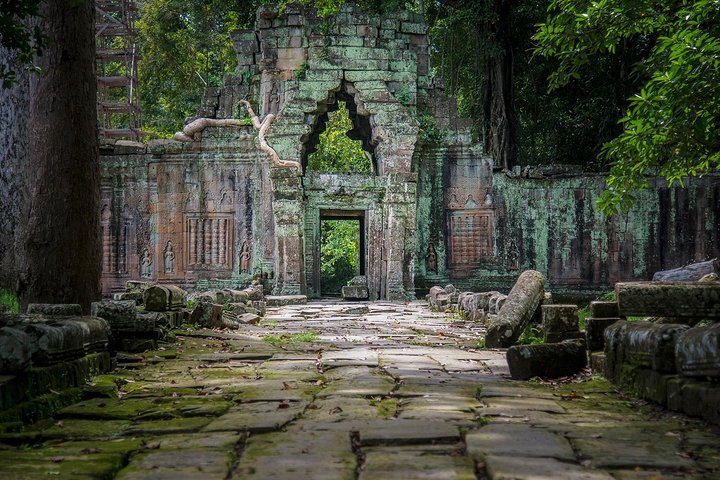
Ta Prohm, famously known as the “Tomb Raider Temple,” offered a different kind of allure. Here, nature and architecture intertwine in a mesmerizing dance, with massive tree roots enveloping the ancient stones. Walking through this temple felt like stepping into another world, a place where time stands still and the whispers of history linger in the air.
A Journey Through Time and Culture
The Angkor Wat tour was not just a journey through ancient ruins; it was an immersion into the rich tapestry of Cambodian culture and history. From the Terrace of the Elephants, where kings once watched their victorious armies return, to the Terrace of the Leper King, with its mysterious statue of Yama, the god of death, each site offered a glimpse into the past.
Our guide’s stories of the Khmer Empire’s rise and fall, its architectural achievements, and its spiritual beliefs added layers of meaning to our exploration. It was a reminder of the resilience and creativity of the Khmer people, whose legacy continues to inspire awe and admiration.
As the tour came to an end, I felt a profound sense of gratitude for the opportunity to experience such a remarkable place. Angkor Wat and its surrounding temples are not just historical sites; they are living testaments to the enduring spirit of a civilization that has shaped the cultural landscape of Southeast Asia. This journey was a reminder of the importance of preserving our shared heritage and the stories that connect us across time and space.