Unveiling the Mysteries of Tamil Nadu’s Ancient Temples
When the call of ancient temples and rich history beckoned, I couldn’t resist the allure of Tamil Nadu’s architectural wonders. Join me as I explore the breathtaking Pallava temples of Kanchipuram and Mahabalipuram, where history and artistry collide in a symphony of stone and devotion.






The Call of the Ancient Temples
As a former professional athlete turned travel writer, my life has been a whirlwind of adrenaline-pumping adventures. From skydiving over the Swiss Alps to scaling the jagged peaks of Patagonia, I’ve always sought the thrill of the unknown. But this time, my journey took me to the heart of Tamil Nadu, India, where the ancient wonders of Pallava architecture awaited.
The day began with an early morning departure from Chennai, the bustling metropolis that serves as the gateway to the rich cultural tapestry of South India. Our destination was Kanchipuram, a city steeped in history and renowned for its magnificent temples. As we drove through the vibrant streets, the anticipation of exploring these architectural marvels was palpable.
Our guide, Nivi, was a fountain of knowledge, her passion for South Indian history and mythology evident in every word. She regaled us with tales of the Pallava dynasty, the rulers who transformed Kanchipuram into a thriving center of art and culture. Her insights added depth to our journey, making each temple visit a step back in time.
A Feast for the Senses
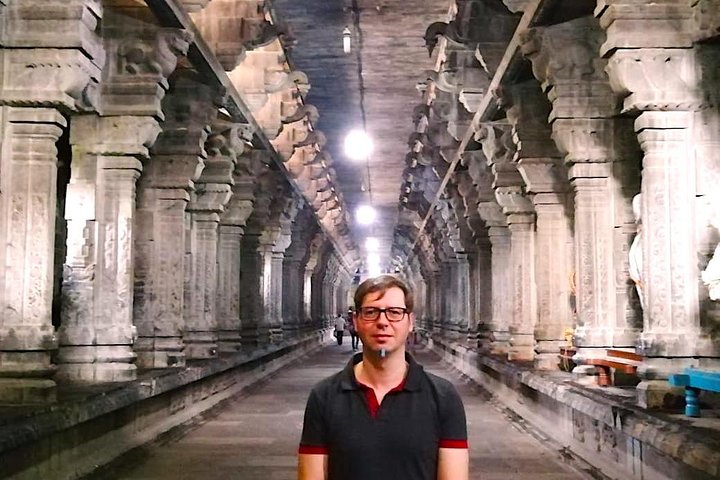
Our first stop was the Ekambareswarar Temple, a colossal structure that stood as a testament to the architectural prowess of the Pallavas. The intricate carvings and towering gopurams left me in awe, each detail telling a story of devotion and artistry. As I wandered through the temple complex, I couldn’t help but feel a sense of reverence for the craftsmen who had dedicated their lives to creating such beauty.
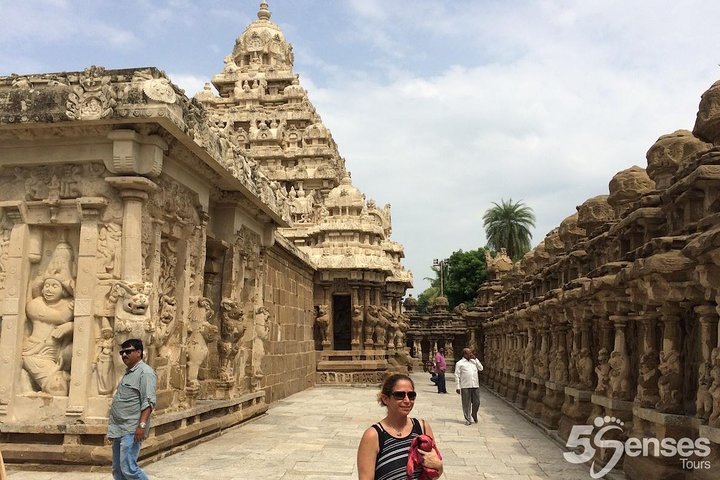
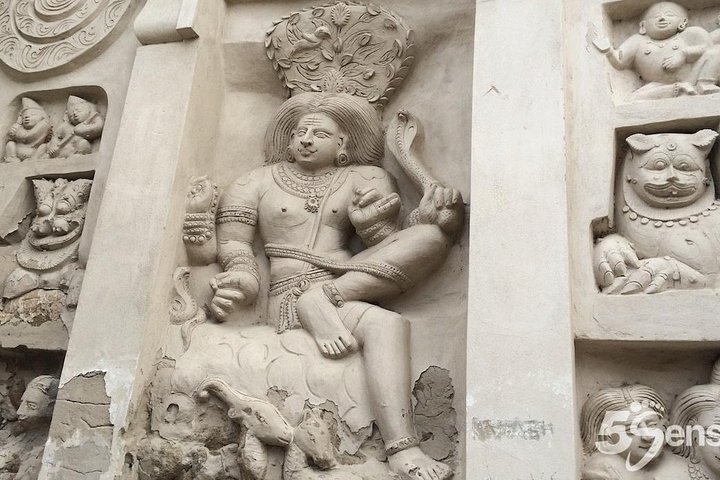
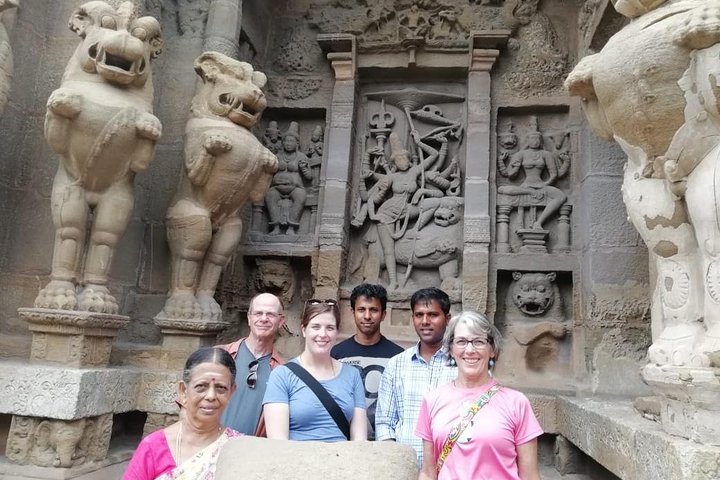
Next, we visited the Kailasanathar Temple, another gem of Pallava architecture. The temple’s stone walls were adorned with exquisite sculptures, each depicting scenes from Hindu mythology. It was here that Nivi’s skills as a photographer shone, capturing the temple’s grandeur from angles that seemed to defy gravity.
After a morning of exploration, we indulged in a traditional South Indian vegetarian lunch. The array of dishes and sauces was a feast for the senses, each bite a burst of flavor that transported me to the heart of Tamil Nadu. Nivi’s explanations of the different dishes added an extra layer of appreciation, turning the meal into a culinary adventure.
The Shoreline Marvels of Mahabalipuram
With our appetites sated, we continued our journey to Mahabalipuram, a coastal town known for its rock-cut temples and stone carvings. Here, we were joined by Ramesh, another guide whose storytelling prowess brought the history of the region to life.
Our first stop was the Pancha Rathas, a group of monolithic temples carved from a single rock. Each structure was dedicated to a character from the epic Mahabharata, their stories etched into the stone for eternity. As I stood before these ancient wonders, I felt a connection to the past, a reminder of the enduring legacy of human creativity.
We then visited Arjuna’s Penance, a massive bas-relief that depicted scenes from Hindu mythology. The sheer scale of the carving was breathtaking, a testament to the skill and dedication of the artisans who had brought it to life.
Our final stop was the iconic Shore Temple, a beacon for seafarers in the 8th century. As the sun set over the Bay of Bengal, the temple’s silhouette against the horizon was a sight to behold, a fitting end to a day filled with wonder and discovery.
This journey through the architectural wonders of Tamil Nadu was a departure from my usual adrenaline-fueled escapades, yet it was no less exhilarating. The rich history and artistry of the Pallava dynasty left an indelible mark on my soul, a reminder that adventure can be found in the most unexpected places. For those seeking a deeper appreciation of South India’s cultural heritage, this tour is an experience not to be missed.


