Unveiling the Mysteries of Hampi: A Cultural Odyssey from Bangalore
Drawn by the allure of ancient ruins and temples, I embarked on a 4-day journey from Bangalore to Hampi. This immersive experience offered a glimpse into the rich tapestry of history and culture that defines this region.



A Journey Through Time: The Ruins of Hampi
As I embarked on the 4-day journey from Bangalore to Hampi, I was filled with anticipation. The allure of ancient ruins and temples, steeped in history and culture, was irresistible. Our journey began with a scenic drive through the lush landscapes of Karnataka, a region that has always fascinated me with its rich tapestry of history and tradition.
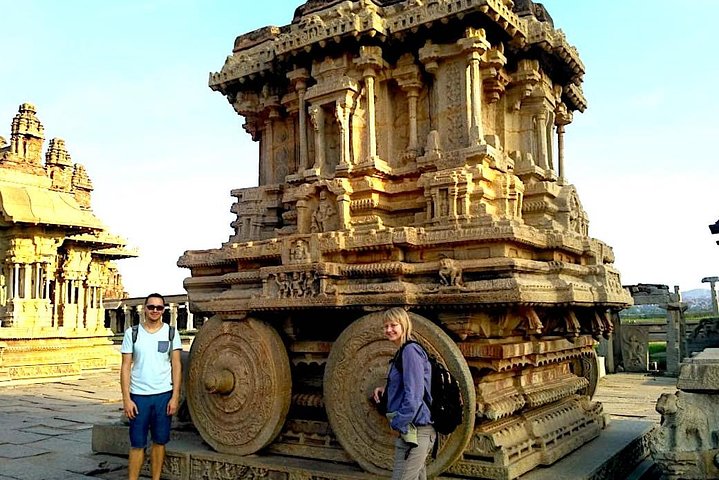
Upon arriving in Hampi, the first thing that struck me was the sheer scale of the ruins. The remnants of the Vijayanagar Empire sprawled across the landscape, each stone whispering tales of a bygone era. Our guide, a cultural ambassador with a deep knowledge of the region, led us through the Group of Monuments at Hampi. The Badavi Linga, a massive black stone lingam, stood majestically, surrounded by water. Nearby, the towering Ugra Narasimha idol loomed over us, a testament to the artistic prowess of ancient sculptors.
As the sun began to set, we made our way to Hemakuta Hill. The view from the top was breathtaking, with ancient temples silhouetted against the vibrant hues of the evening sky. The day concluded with a visit to the Virupaksha Temple, the oldest in Hampi, where the river Tungabhadra flowed serenely within its walls. The temple’s eleven-storey tower stood as a beacon of spiritual devotion, a reminder of the enduring legacy of the Hoysala period.
The Royal Enclosures: A Glimpse into Regal Life
The next day, we delved deeper into the heart of Hampi, exploring the Royal Enclosures. The Vijaya Vittala Temple, with its intricate musical pillars, was a marvel of engineering and artistry. Each pillar, when struck, resonated with a unique musical note, a symphony carved in stone. The King’s Balance, a massive stone frame, stood as a symbol of the generosity of the Vijayanagara kings, who weighed themselves with gold and gems to distribute among the poor.
The Royal Enclosures offered a glimpse into the opulent lives of the rulers. The Elephant Stables, Queen’s Bath, and Lotus Mahal were architectural wonders, each structure telling its own story of grandeur and elegance. The Zanana Enclosure, once the domain of royal women, was a serene space, its walls echoing with the whispers of history.
In the evening, we ventured to Anegundi village, where ancient cave paintings awaited us. These paintings, dating back to the Iron Age, were a window into the lives of our ancestors, their stories etched in stone for eternity. It was a humbling experience, standing in the presence of such ancient art, a reminder of the timeless connection between past and present.
The Mystical Caves of Badami
Our journey continued to the mystical caves of Badami, Aihole, and Pattadakal. Each site was a treasure trove of history, with temples and sculptures that spoke of a rich cultural heritage. Aihole, with its hundred stone temples, was a testament to the architectural brilliance of the 5th century. Legend has it that Lord Parashurama washed his axe here after vanquishing the Kshatriyas, adding a mythical dimension to the site.
Pattadakal, a UNESCO World Heritage Site, was a celebration of the Visara style of architecture. The Virupaksha Temple, built by Queen Lokamahadevi in the 8th century, stood as a monument to her devotion and vision. The intricate carvings and sculptures were a feast for the eyes, each detail meticulously crafted by skilled artisans.
Finally, we arrived at the Badami Cave Temples, nestled in a ravine at the foot of red sandstone hills. The caves, with their pillared halls and square sanctums, were adorned with vibrant ceiling paintings. As I stood in the cool shade of the caves, I felt a profound sense of connection to the past, a reminder of the enduring legacy of human creativity and spirituality.
As our journey came to an end, I reflected on the rich tapestry of history and culture that we had experienced. The ruins and temples of Hampi and beyond were not just remnants of the past, but living testaments to the enduring spirit of a civilization that continues to inspire and captivate. This journey was a reminder of the importance of preserving our cultural heritage, a legacy that belongs to all of humanity.