Embark on a 4-night adventure in Lebanon, exploring its rich history, captivating culture, and breathtaking natural landscapes. Visit ancient archaeological sites, marvel at stunning valleys and nature reserves, and immerse yourself in the country’s artistic heritage. Join us on this unforgettable multi-day tour from Beirut!
Embark on a 4-night adventure in Lebanon, exploring its rich history, captivating culture, and breathtaking natural landscapes. Visit ancient archaeological sites, marvel at stunning valleys and nature reserves, and immerse yourself in the country’s artistic heritage. Join us on this unforgettable multi-day tour from Beirut!
Arrival Day: Airport Transfer
Beirut International Airport - Welcome to Beirut! A professional driver will transport you to your hotel in Beirut. Take some time to relax and prepare for your exciting tour the following day!
Beirut - Welcome to Beirut! A professional driver will transport you to your hotel in Beirut. Take some time to relax…
Arrival Day: Airport Transfer
Beirut International Airport - Welcome to Beirut! A professional driver will transport you to your hotel in Beirut. Take some time to relax and prepare for your exciting tour the following day!
Beirut - Welcome to Beirut! A professional driver will transport you to your hotel in Beirut. Take some time to relax and prepare for your exciting tour the following day!
Jeita Grotto, Harissa & Byblos
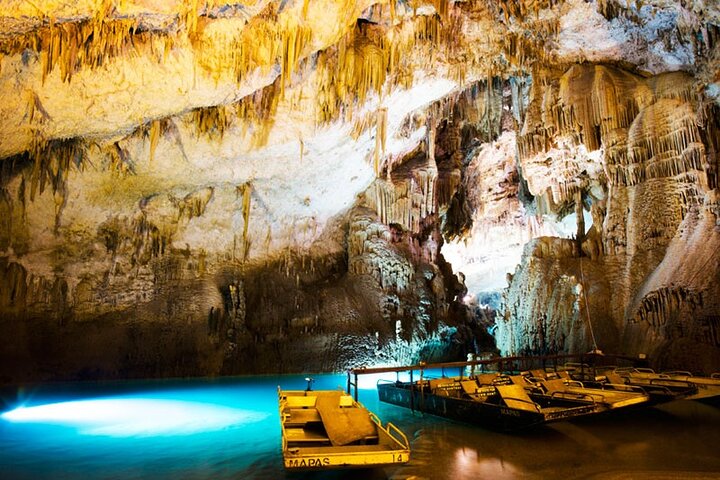
Jeita Grotto - The Jeita Grotto, a network of two distinct yet connected karstic limestone caves formed over millions of years, is the longest cave system in the Middle East. Situated 300 meters above sea level, it has a height difference of 305 meters. The upper cave stretches 2,130 meters and features a rich variety of crystallized formations, including stalactites, stalagmites, columns, mushrooms, ponds, curtains, and draperies. The lower gallery, 6,200 meters long, is located 60 meters below the upper gallery and is traversed by a serene underwater river and lake.
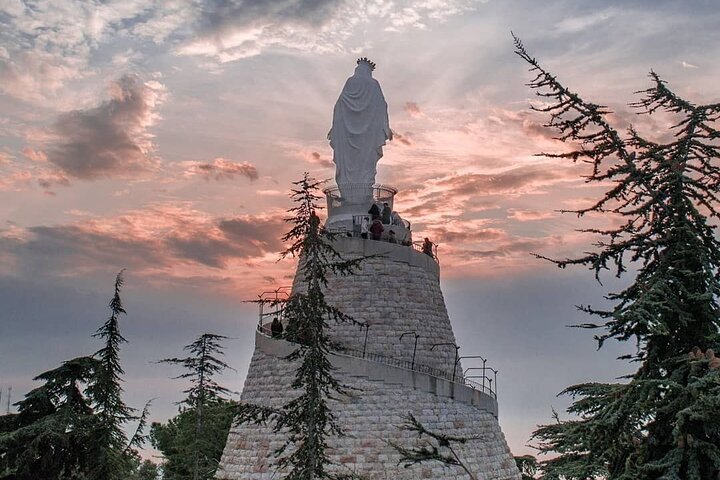
The Shrine of Our Lady of Lebanon - The Shrine of Our Lady of Lebanon is one of the world’s most significant sites honoring the Virgin Mary, located in Harissa, a major Christian pilgrimage destination in Lebanon. The shrine is marked by a massive 15-ton bronze statue of the Immaculate Conception, Mother of God, standing 8.5 meters high with a diameter of five meters. The Virgin Mary extends her hands towards Beirut, offering one of the world’s most stunning panoramic views over the Bay of Jounieh.
Churches of Harissa - Harissa is a major Christian pilgrimage site featuring a shrine dedicated to Our Lady of Lebanon. The site includes a large 15-ton bronze and painted white statue of the Virgin Mary, known as Our Lady of Lebanon or Notre Dame du Liban, with her arms outstretched. The statue, created at the end of the 19th century and inaugurated in 1908, houses a small chapel at its base. Additionally, a grand cathedral made of concrete and glass stands nearby. Other churches in the Harissa area include the Byzantine-style Melkite Greek Catholic Basilica of St. Paul, built between 1948 and 1998, the Apostolic Nunciature (Papal Embassy), and the residences of four patriarchs of Eastern Catholic Churches.
Téléferique Harissa - The Téléferique is one of Lebanon’s oldest and most popular tourist attractions. This gondola lift system, located in Jounieh, 16 km north of Beirut, transports passengers over pine-forested steep mountains to an altitude of 650 meters, arriving at the Our Lady of Lebanon shrine in Harissa, offering breathtaking views of the Bay of Jounieh and the surrounding city.
Byblos - Byblos, one of the oldest Phoenician cities, has been inhabited since Neolithic times and is closely linked to the legends and history of the Mediterranean region for thousands of years. Byblos is also directly associated with the history and spread of the Phoenician alphabet.
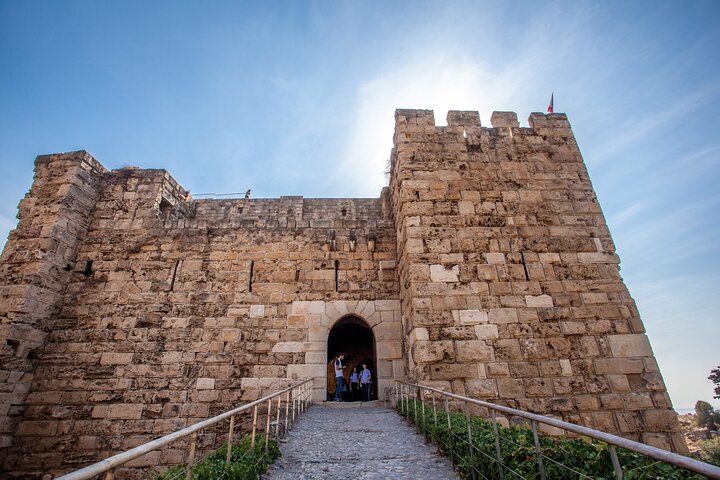
Byblos Castle - Byblos Castle, a restored 12th-century Crusader castle surrounded by a 10-meter-wide dry moat, is located within Byblos’ atmospheric archaeological site, which contains the ruins of the Temple of Baalat Gebal and the Temple of the Obelisks. This impressive structure offers an excellent view of the ruins from the top of its square keep. A series of Bronze Age dwellings is clearly visible below the walls as you look towards the sea. Inside the castle, there’s a small museum and a room with information panels outlining the city’s history.
Old Souk - Byblos Old Souk is a historic market where visitors can shop for souvenirs and antiques or simply stroll along the old cobblestone streets and admire the architecture.
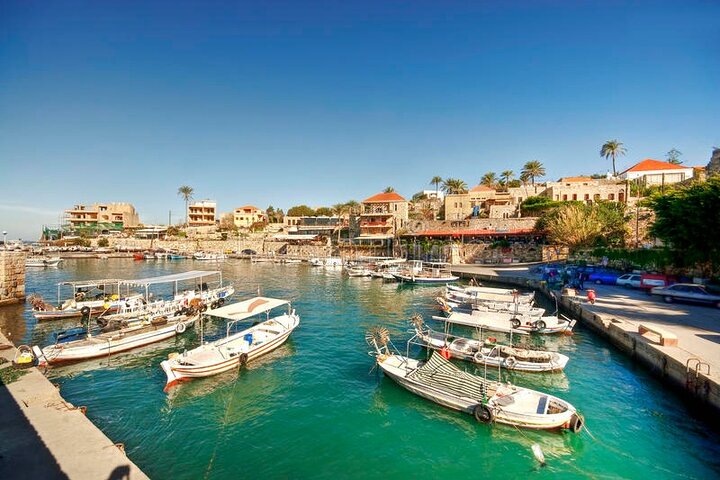
Byblos Port - Byblos Port is an ancient port in Byblos and is believed by the Lebanese to be the oldest port in the world. Around 3000 BC, Byblos Port was the most important timber shipping center in the eastern Mediterranean.
Baalbek, Anjar & Chateau Ksara
Baalbek - Baalbek is home to the Baalbek temple complex, which includes two of the largest and most magnificent Roman temple ruins: the Temple of Bacchus and the Temple of Jupiter. It was inscribed as a UNESCO World Heritage site in 1984. This Phoenician city, where a triad of deities was worshipped, was known as Heliopolis during the Hellenistic period. It retained its religious significance during Roman times, when the sanctuary of the Heliopolitan Jupiter attracted thousands of pilgrims. Baalbek, with its colossal structures, is one of the finest examples of Imperial Roman architecture at its peak.
Temples of Baalbek - The temple complex at Baalbek is located at the foot of the southwest slope of Anti-Lebanon, bordering the fertile Bekaa plain at an altitude of 1150 meters. The city of Baalbek reached its peak during Roman times. Its colossal constructions, built over more than two centuries, make it one of the most famous sanctuaries of the Roman world and a model of Imperial Roman architecture. Pilgrims flocked to the sanctuary to venerate the three deities, known as the Romanized Triad of Heliopolis, an essentially Phoenician cult (Jupiter, Venus, and Bacchus).
Temples of Baalbek - Baalbek’s Roman ruins, Lebanon’s greatest Roman treasure, are considered among the wonders of the ancient world. The largest and most noble Roman temples ever built, they are also among the best preserved.
Temple of Jupiter - The Temple of Jupiter is a colossal Roman temple, the largest in the Roman world, located at the Baalbek complex in Heliopolis. The temple served as an oracle and was dedicated to Jupiter Heliopolitanus. The designer and exact construction date are unknown, but work likely began around 16 BC and was nearly complete by AD 60. It is situated at the western end of the Great Court of Roman Heliopolis, on a broad stone platform raised another 7 meters (23 feet) above the massive foundation stones, three of which are among the heaviest blocks ever used in construction. It was the largest temple dedicated to Jupiter in the entire Roman Empire. The columns were 30 meters high with a diameter of nearly 2.5 meters, the largest in the classical world. It took three centuries to complete this colossal temple complex.
Temple of Bacchus - The Temple of Bacchus is part of the Baalbek temple complex located in the Bekaa Valley, Lebanon. The temple complex is considered an outstanding archaeological and artistic site of Imperial Roman Architecture and was inscribed as a UNESCO World Heritage site in 1984. The Temple of Bacchus is one of the best-preserved and grandest Roman temple ruins; its age is unknown, but its fine ornamentation can be dated to the second century CE.
Temple of Venus - The Temple of Venus was constructed in the third century. Built on a horseshoe-shaped platform, it consists of a circular shrine with a square entrance that is almost as large. The outer façade of the shrine is adorned with five niches, meaning there is not a single square wall. The niches feature representations of doves and shells, suggesting the shrine was dedicated to Venus.
Sayyida Khawla Shrine - The Mosque of Sayyida Khawla in Baalbek, Lebanon, is erected on the site where Sayyida Khawla, the daughter of Imam al-Hussein, the grandson of the Prophet Muhammad, is believed to be buried. Locals believe that when the caravan of captives from Karbala passed through Baalbek, Sayyida Khawla passed away and was buried there.
Stone of the Pregnant Woman - The Stone of the Pregnant Woman is a worked Roman monolith in Baalbek, Lebanon. Along with another ancient stone block nearby, it is among the largest monoliths ever quarried. These two building blocks were presumably intended for the nearby Roman temple complex and are characterized by a monolithic gigantism unparalleled in antiquity.
Anjar - The city of Anjar was founded by Caliph Walid I at the beginning of the 8th century. The ruins reveal a very regular layout, reminiscent of the palace-cities of ancient times, and are a unique testimony to city planning under the Umayyads.
Umayyad Ruins of Aanjar - The Umayyad Ruins of Aanjar bear outstanding witness to the Umayyad civilization and serve as a good example of an inland commercial center at the crossroads of two important routes: one leading from Beirut to Damascus and the other crossing the Bekaa and leading from Homs to Tiberias. The site of this ancient city was only discovered by archaeologists at the end of the 1940s. The ruins of Anjar include the walls of the Umayyad palace, harems, a mosque, the great palace of the Caliph, thermal baths, and many pillars that incorporate elements of Roman architectural style.
Chateau Ksara - Château Ksara is a wine company in the Beqaa Valley, Lebanon. Founded in 1857 by Jesuit priests, Château Ksara developed the first dry wine in Lebanon. Château Ksara produces approximately 3 million bottles annually, with its wines exported to over 40 countries.
Qadisha Valley, Bcharre, and Cedars of God
Qadisha Valley - Qadisha Valley is one of the most important settlement sites of the first Christian monasteries in the world, with its monasteries, many of which are of great age, set in an extraordinarily rugged landscape. The Qadisha Valley includes all the caves, monasteries, and cultivated terraces associated with activities from a very early phase of Christianity.
Gibran Museum - The Gibran Museum, formerly the Monastery of Mar Sarkis, is a biographical museum in Bcharre, Lebanon. It is dedicated to the Lebanese writer, philosopher, and artist Kahlil Gibran. Founded in 1935, the Gibran Museum houses 440 original paintings and drawings by Gibran, as well as his tomb. It also includes his furniture and belongings from his studio in New York City and his private manuscripts.
The Cedars of God - The Forest of the Cedars of God, with its 375 trees, is the last remnant of ancient forests and one of the rare sites where the Cedars still grow. Highly prized in ancient times, it was one of the most valued construction materials for great religious buildings and is mentioned 103 times in the Bible. The Cedar is the symbol of the country, its pride, and prominently features on the Lebanese flag.
Deir Qozhaya - The Monastery of Saint Anthony the Great is situated at a height of 950 meters above sea level in the renowned Valley of Qozhaya. The surrounding hills are covered with pine and oak trees. Fruit trees of every kind grow throughout the valley, which extends into the Valley of Qannubin to form the great Qadisha Valley, thus bearing witness to the history of eremitic life and the quest for holiness in Lebanon. Historians and scholars believe that this monastery was first built and occupied by hermits at the beginning of the fourth century. It was looted, set on fire, and razed to the ground several times, but remnants dating back to the seventh century still remain.
Departure Day: Airport Transfer
Beirut - Prepare yourself and your luggage to depart Lebanon after enjoying the three-day holiday package. We hope you will return and visit Lebanon again!
Beirut International Airport - After checking out of your hotel in Beirut, our representative will be waiting to transfer you to Beirut Airport 2-3 hours before your flight departure. We wish you a pleasant journey and a safe flight.

- 4 Nights at Beirut City Hotel
- Hotel Pick-up and Drop-off Included
- Daily Breakfast
- Lunch Provided
- Round-trip Airport Transfers
- Participation in 3 Small Group Tours
- 4 Nights at Beirut City Hotel
- Hotel Pick-up and Drop-off Included
- Daily Breakfast
- Lunch Provided
- Round-trip Airport Transfers
- Participation in 3 Small Group Tours
- Dinner
- Personal Expenses
- Dinner
- Personal Expenses
On this 4 nights tour package, you will combine history, culture and nature in a combo. Indulge into Lebanon history by visiting the archeological sites of Baalbek, Byblos and Anjar. Enjoy the natural beauty while stunning at the landscape of Qadisha valley, the charm of Cedars of god nature reserve and the majestic of Jeita grotto. Visit our Lady of…
On this 4 nights tour package, you will combine history, culture and nature in a combo. Indulge into Lebanon history by visiting the archeological sites of Baalbek, Byblos and Anjar. Enjoy the natural beauty while stunning at the landscape of Qadisha valley, the charm of Cedars of god nature reserve and the majestic of Jeita grotto. Visit our Lady of Lebanon shrine and St. Qozhaya monastery. And discover a museum, manuscripts, home and tomb of a famous Lebanese artist. All in a multi-day tour from Beirut accompanied by a professional guide. By the end of the tour you will have unforgettable memories of this north east Lebanon tour.
If you cancel at least 6 full day(s) before the scheduled departure time, you will receive a full refund.
If you cancel between 2 and 6 day(s) before the scheduled departure time, you will receive a 50% refund.
If you cancel within 2 day(s) of the scheduled departure, you will receive a 0% refund.
If you cancel at least 6 full day(s) before the scheduled departure time, you will receive a full refund.
If you cancel between 2 and 6 day(s) before the scheduled departure time, you will receive a 50% refund.
If you cancel within 2 day(s) of the scheduled departure, you will receive a 0% refund.