Exploring the Timeless Tulou: A Cultural Odyssey in Fujian
Drawn by the allure of Fujian’s ancient Tulou, I embarked on a journey to Zhangzhou, eager to explore these architectural marvels and the rich cultural tapestry of the Hakka people. Join me as I delve into a world where tradition and community thrive amidst the serene beauty of rural China.


A Journey Through Time: The Tulou of Fujian
As I embarked on my journey from Xiamen to the Fujian countryside, I was filled with anticipation. The allure of the Tulou, the ancient earthen structures of the Hakka people, had long intrigued me. These architectural marvels, recognized as a UNESCO World Heritage site, promised a glimpse into a world where tradition and community thrived amidst the rolling hills of Zhangzhou.
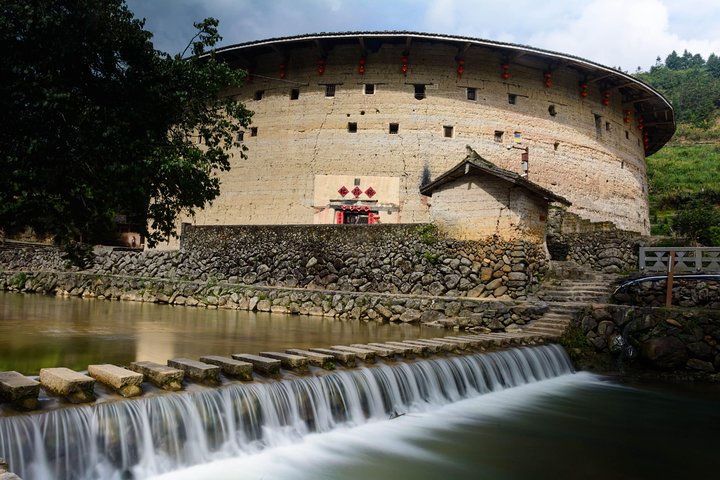
The drive to the Tianluokeng Tulou cluster was a scenic one, with lush greenery and terraced fields painting a serene picture of rural China. Upon arrival, the sight of the Tulou was nothing short of breathtaking. These massive, circular structures stood as a testament to the ingenuity and resilience of the Hakka people. Built without the aid of modern machinery, the Tulou were designed to withstand the test of time and the elements, serving as communal homes for generations.
Our guide, a local with an intimate knowledge of the area, led us through the YuChang Tulou, one of the oldest and most unique of the structures. Known as the “Leaning Tulou,” its slight tilt added to its charm and character. As we explored the five-story complex, I was struck by the sense of community that permeated the space. Families went about their daily routines, their lives intertwined within the circular walls that had sheltered their ancestors.
The Heart of the Hakka: Tianluokeng and Taxia Villages
From the highest lookout point in Tianluokeng, I gazed down at the Tulou cluster, arranged in a formation reminiscent of the Chinese five elements. The view was nothing short of spectacular, with the round and square buildings nestled harmoniously into the hillside. It was a scene that seemed to transcend time, a perfect blend of nature and human ingenuity.
After capturing the panoramic beauty with my camera, we descended to enjoy a meal at a local restaurant. The flavors of the Fujian cuisine were a delightful surprise, each dish a testament to the region’s rich culinary heritage. As I savored the local delicacies, I couldn’t help but feel a deep connection to the land and its people.
Our journey continued to the tranquil Taxia Village, a place that seemed untouched by the passage of time. Known as the “Zhouzhuang Water Town of South Fujian,” Taxia was a picturesque tapestry of old bridges, stone-paved lanes, and riverside views. The Zhang’s Ancestral Hall stood as a reminder of the village’s storied past, a place where the Hakka people paid homage to their ancestors.
Reflections on a Cultural Tapestry
As our day drew to a close, I found myself reflecting on the profound sense of history and tradition that the Tulou and the surrounding villages embodied. This journey was more than just a tour; it was an immersion into a way of life that has endured for centuries. The Hakka people, with their rich cultural heritage, have created a legacy that continues to inspire and captivate.
The return journey to Xiamen was a time for contemplation, as the sun set over the Fujian countryside. I felt a renewed appreciation for the intricate tapestry of cultures that make up this vast continent. The Tulou of Fujian are not just buildings; they are living monuments to the enduring spirit of a people who have thrived in harmony with their environment.
For those seeking a deeper understanding of China’s diverse cultural landscape, a visit to the Tulou is an experience not to be missed. It is a journey that offers not only breathtaking views and delicious cuisine but also a profound connection to the past and a glimpse into the heart of the Hakka community. Discover Fujian’s Tulou