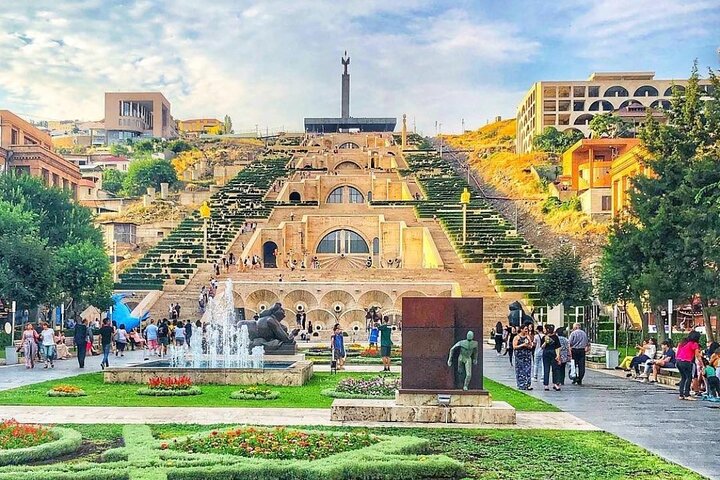
Exploring Armenia’s Eco-Paradise: A Journey Through the Valley of Flowers
Drawn by Armenia’s commitment to eco-friendly tourism, I embarked on the Lake Sevan and Tsaghkadzor Tour. This journey promised not only stunning landscapes but also a chance to support sustainable travel practices.


Discovering the Valley of Flowers
As an advocate for sustainable tourism, I am always on the lookout for destinations that offer not only breathtaking beauty but also a commitment to preserving the environment. Armenia, with its rich natural landscapes and eco-conscious tourism initiatives, has long been on my radar. The Lake Sevan and Tsaghkadzor Tour, promising an immersion into Armenia’s ‘Valley of Flowers,’ seemed like the perfect opportunity to explore this enchanting region while supporting sustainable travel practices.
The journey began in Yerevan, Armenia’s vibrant capital, where I joined a small group of like-minded travelers. Our first stop was Tsaghkadzor, a name that translates to “Blooming Gorge.” This ecological paradise, just thirty kilometers from Yerevan, is a haven for nature lovers. As we arrived, the air was filled with the scent of blooming flora, and the tranquility of the forest enveloped us. The Kecharis Monastery, nestled amidst this lush landscape, stood as a testament to the harmonious coexistence of history and nature.
Walking through the monastery grounds, I was struck by the sense of peace that permeated the area. The ancient stones seemed to whisper stories of the past, while the surrounding birch groves provided a serene backdrop. It was a reminder of the importance of preserving such sites, not only for their historical value but also for the natural beauty they embody.
Embracing the Azure Beauty of Lake Sevan
Leaving Tsaghkadzor, we continued our journey to Lake Sevan, one of Armenia’s most iconic natural wonders. As we approached, the vast expanse of azure water came into view, framed by majestic mountain peaks. Lake Sevan, often referred to as the “blue-eyed beauty,” is the largest source of fresh water in the Caucasus and a vital ecological resource for the region.
Standing on the shores of the lake, I was captivated by the seamless blend of water and mountains. The shimmering waves played under the sun, creating a mesmerizing dance that seemed to erase the boundaries between land and sea. It was easy to understand why ancient Armenians referred to Sevan as “the Geghama Sea.”
Our visit to the Sevanavank Monastery, perched on a peninsula overlooking the lake, offered a unique perspective on the interplay between human history and natural beauty. The monastery, with its ancient stone structures, has stood the test of time, much like the lake itself. It was a poignant reminder of the need to protect these treasures for future generations, ensuring that they remain a source of inspiration and tranquility.
A Commitment to Sustainable Exploration
Throughout the tour, I was heartened to see the emphasis on sustainable practices. From the small group size to minimize environmental impact, to the local guides who shared their knowledge of the region’s ecology, every aspect of the tour was designed with conservation in mind. It was a testament to Armenia’s dedication to promoting eco-friendly tourism and preserving its natural heritage.
As we made our way back to Yerevan, I reflected on the profound connection between nature and culture that I had experienced. The Lake Sevan and Tsaghkadzor Tour was more than just a journey through stunning landscapes; it was an opportunity to engage with a region that values its environment and strives to protect it. For those seeking an eco-conscious adventure, Armenia’s ‘Valley of Flowers’ offers a glimpse into a world where nature and history coexist in perfect harmony.
This experience reaffirmed my belief in the power of sustainable travel to foster a deeper appreciation for the natural world. As travelers, we have a responsibility to support destinations that prioritize conservation, ensuring that the beauty we enjoy today will be preserved for generations to come. Armenia, with its commitment to eco-friendly tourism, is a shining example of how we can explore the world while protecting its most precious resources.