Embracing the Arctic: A Journey into Sami Culture in Tromsø
Drawn by the allure of the Arctic and the rich cultural tapestry of the Sami people, I embarked on a journey to Tromsø. What awaited was an unforgettable experience of feeding reindeer, savoring traditional Sami stew, and immersing myself in the haunting melodies of joik.


Into the Heart of the Sami Land
The Arctic has always been a place of extremes, a land where survival is a testament to resilience and adaptation. My journey to Tromsø, a city that sits on the edge of the world, was driven by a desire to experience the raw beauty and cultural richness of the Sami people. The Sami, indigenous to the Arctic, have thrived in this harsh environment for centuries, and their relationship with the reindeer is a story of mutual respect and survival.
Upon arrival at the Sami camp, the air was crisp, and the landscape was a stark contrast of white snow against the dark fjords. The Sami hosts greeted us with warmth that cut through the cold, their smiles as bright as the snow under the Arctic sun. The camp was a hive of activity, with reindeer roaming freely, their antlers silhouetted against the vast sky. The guides, dressed in traditional Sami attire, exuded a sense of pride and connection to their heritage that was palpable.
The reindeer, numbering around 350, were a sight to behold. As a former Arctic researcher, I was fascinated by their adaptability and the role they play in the ecosystem. Feeding them was an exhilarating experience, as they cautiously approached, their breath visible in the cold air. The reindeer were semi-wild, a reminder of the untamed nature of the Arctic, yet they allowed us to feed them, a gesture of trust that felt profound.
A Taste of Tradition
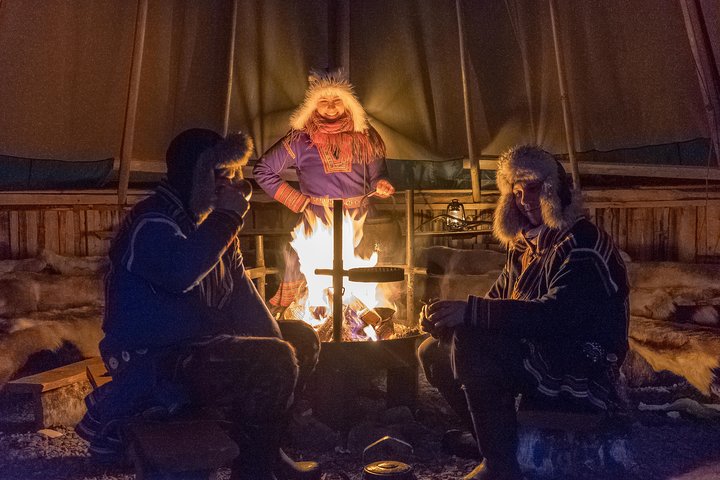
After the thrill of feeding the reindeer, we gathered in a traditional Sami hut, the gamme, where the warmth of the fire was a welcome respite from the biting cold. The aroma of bidos, a traditional Sami stew, filled the air, promising comfort and sustenance. The stew, rich and hearty, was a reflection of the Sami’s resourcefulness, using every part of the reindeer to sustain themselves in this unforgiving land.
As we ate, the Sami hosts shared stories of their culture and history, their voices weaving a tapestry of tradition and survival. The Sami have lived in harmony with the land for generations, their knowledge of the Arctic environment unparalleled. Listening to their stories, I was reminded of the delicate balance between man and nature, a balance that is increasingly threatened by climate change.
The meal was more than just food; it was an invitation into the Sami way of life, a glimpse into a world where community and tradition are the cornerstones of survival. The warmth of the fire and the camaraderie of the group created a sense of belonging, a feeling that transcended the cold and isolation of the Arctic.
The Echoes of Joik
The final part of the experience was spent in a lavvu, a traditional Sami tent, where we gathered around the fire to listen to the haunting melodies of joik, the traditional Sami songs. The joik is more than just music; it is a form of storytelling, a way to connect with the past and the land. The Sami guide’s voice rose and fell with the crackling of the fire, the notes echoing in the stillness of the Arctic night.
As I listened, I was struck by the resilience of the Sami people, their ability to maintain their cultural identity in the face of modern challenges. The joik was a reminder of the enduring spirit of the Arctic, a testament to the strength and adaptability of those who call it home.
Leaving the Sami camp, I felt a deep sense of gratitude for the opportunity to experience their way of life. The Arctic is a place of extremes, but it is also a place of profound beauty and cultural richness. The Sami, with their deep connection to the land and their unwavering spirit, are a testament to the resilience of the human spirit in the face of adversity. This journey was more than just a visit; it was a reminder of the importance of preserving the delicate balance of the Arctic and the cultures that have thrived there for centuries.


