

Capture the essence of Tokyo’s vibrant street art, iconic shrines, and pop culture on a private tour. Discover the most Instagrammable places and let your creativity soar!
Capture the essence of Tokyo’s vibrant street art, iconic shrines, and pop culture on a private tour. Discover the most Instagrammable places and let your creativity soar!
- Senso-ji Temple - Sensō-ji is a renowned Buddhist temple situated in Asakusa. This vibrant and well-loved temple is marked by the Kaminarimon Gate (Thunder Gate) at its entrance. From here, both locals and tourists stroll along Nakamise-Dori, a historic street lined with souvenir shops, leading to the second gate, the Hozomon. Outside Tokyo’s…
- Senso-ji Temple - Sensō-ji is a renowned Buddhist temple situated in Asakusa. This vibrant and well-loved temple is marked by the Kaminarimon Gate (Thunder Gate) at its entrance. From here, both locals and tourists stroll along Nakamise-Dori, a historic street lined with souvenir shops, leading to the second gate, the Hozomon. Outside Tokyo’s oldest temple’s main hall and pagoda, visitors will find a hand-washing fountain, small stalls selling charms, and rows of drawers for daily fortune readings.
The temple grounds provide excellent photo opportunities during Nakamise-Dori’s trading hours when the area is less crowded. If visiting early in the morning, be mindful of the shadows cast on some temple buildings by nearby skyscrapers. The main hall is open daily from 6 am to 5 pm, while the temple grounds are always accessible, and entry is free.
-
Hie Jinjya - If a trip to Kyoto to see the famous Fushimi Inari-taisha Torii gates isn’t possible, don’t worry. Tokyo offers a tunnel of 90 red torii gates. Without prior knowledge of the city’s shrines, this spot might be overlooked, yet it is one of Tokyo’s hidden photography gems. Hie Shrine is a significant shrine in Tokyo and serves as the starting point for Sannō Matsuri, one of the three great Japanese festivals from the Edo period. Nestled on a tree-covered hilltop, Hie Shrine is a peaceful place for locals to worship.
-
Shibuya Crossing - A visit to Tokyo wouldn’t be complete without a photo at Shibuya Crossing. Known as the world’s busiest pedestrian crosswalk, Shibuya Crossing also features the bronze statue of Hachikō, the loyal Japanese Akita dog who waited at Shibuya Station daily for nine years after his owner’s passing.
A popular vantage point to observe the organized chaos is from the second floor of Tsutaya Starbucks.
The ideal time to visit Shibuya Crossing is around dusk or later when thousands of locals and tourists gather for dining or shopping. Capture a long exposure photo of the bustling intersection against the backdrop of neon-lit buildings.
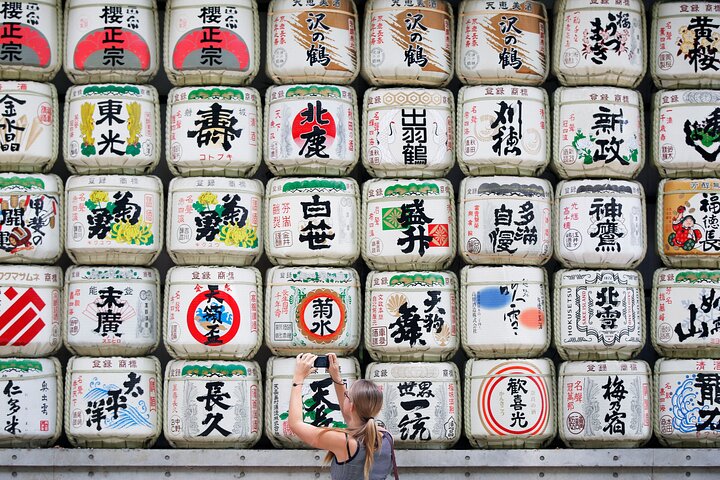
- Meiji Jingu Shrine - Sake Barrels @ Meiji Shrine, The Meiji Jingu (Meiji Shrine) is Tokyo’s largest and most renowned Shinto Shrine. Spanning 175 acres on the edge of Shibuya, the precinct houses a vast collection of decorative sake barrels known as kazaridaru. Traditionally, sake has served as a bridge between the Japanese people and the gods, with sake breweries annually donating barrels for ceremonies and festivals.
The Meiji Shrine is about a 10-minute walk from Harajuku Station. It is open daily from sunrise to sunset, and entry to the shrine precinct is free. Please be respectful and stay in front of the rope for photos.
-
Takeshita Street - Dubbed “the cutest street in Tokyo,” Takeshita Street is located in Harajuku. It offers an abundance of cuteness, from kawaii clothing shops to pink crepe shops and rainbow cotton candy vendors. The crepe shops are popular local selfie spots.
-
Omoide Yokocho - Omoide Yokocho is a narrow lane filled with small restaurants, bars, and shops, offering a glimpse into Japanese back alley culture. Despite its small size, it is bustling with activity, creating a delightful chaos.
The lanes appear to be from a bygone era, contrasting sharply with the modernity of the surrounding Shinjuku District. Omoide Yokocho is also known as “Memory Lane,” reflecting its unchanged nature over time. The enticing aroma of street food and brightly lit lanterns are sure to draw you in.
This is an excellent spot for capturing nostalgic Tokyo Instagram shots and enjoying delicious Japanese cuisine!
- Shinjuku Golden Gai - Shinjuku Golden Gai is a compact area in Tokyo brimming with character. It boasts a unique and captivating nightlife scene, with small bars nestled together along narrow alleys and passageways.
The lanes are only wide enough for one person to pass through, making it an ideal location for photographing Tokyo’s city streets.
You can easily capture all the distinctive elements in one frame. At night, when the lights dim and the lanterns and neon signs illuminate, this area becomes especially enchanting.
-
Imperial Palace - This tour does not include access to the inside of the Imperial Palace
The current Imperial Palace (皇居, Kōkyo) is situated on the former site of Edo Castle, a vast park area encircled by moats and massive stone walls in central Tokyo, a short walk from Tokyo Station. It is the residence of Japan’s Imperial Family. -
Shinjuku Gyoen National Garden - Adults ¥500 (Group discount ¥400)
Seniors (65 and over) ¥250 ※Valid ID required. Please purchase a ticket at a staffed counter.
Students ¥250 ※Valid Student ID required. Please purchase a ticket at a staffed counter.
Children (junior high school students /15 and under) FREE -
Tsukiji Fish Market - Discover the historic fish market in Tokyo!
-
Akihabara - Akihabara (秋葉原), also known as Akiba after a former local shrine, is a district in central Tokyo renowned for its numerous electronics shops. In recent years, Akihabara has also become recognized as the hub of Japan’s otaku (diehard fan) culture, with many shops and establishments dedicated to anime and manga interspersed among the electronic stores. On Sundays, Chuo Dori, the district’s main street, is closed to car traffic from 13:00 to 18:00 (until 17:00 from October through March).
-
Koishikawa Korakuen Garden - Koishikawa Korakuen (小石川後楽園, Koishikawa Kōrakuen) is one of Tokyo’s oldest and finest Japanese gardens. It was constructed in the early Edo Period (1600-1867) at the Tokyo residence of the Mito branch of the ruling Tokugawa family. Like its counterpart in Okayama, the garden was named Korakuen after a poem encouraging a ruler to seek pleasure only after ensuring his people’s happiness. Koishikawa is the district where the garden is located.
-
Hama Rikyu Gardens - Hama Rikyu (浜離宮, Hama Rikyū) is a large, picturesque landscape garden in central Tokyo. Situated alongside Tokyo Bay, Hama Rikyu features seawater ponds that change level with the tides and a teahouse on an island where visitors can relax and enjoy the scenery. The traditionally styled garden stands in stark contrast to the skyscrapers of the adjacent Shiodome district.
-
Tokyo National Museum - The Tokyo National Museum (東京国立博物館, Tōkyō Kokuritsu Hakubutsukan) is the oldest and largest of Japan’s premier national museums, which also include the Kyoto National Museum, the Nara National Museum, and the Kyushu National Museum. It was initially established in 1972 at Yushima Seido Shrine and later relocated to its current site in Ueno Park.
The Tokyo National Museum boasts one of Japan’s largest and finest collections of art and archaeological artifacts, comprising over 110,000 individual items, including nearly a hundred national treasures. At any given time, approximately 4,000 different items from the permanent collection are on display. Additionally, temporary exhibitions are regularly held. Comprehensive English information and audio guides are available.
-
Rikugien Garden - Rikugien (六義園) is often regarded as Tokyo’s most beautiful Japanese landscape garden alongside Koishikawa Korakuen. Built around 1700 for the 5th Tokugawa Shogun, Rikugien literally means “six poems garden” and recreates in miniature 88 scenes from famous poems. The garden exemplifies an Edo Period strolling garden and features a large central pond surrounded by manmade hills and forested areas, all connected by a network of trails.
-
Yoyogi Park - Yoyogi Park (代々木公園, Yoyogi Kōen) is one of Tokyo’s largest city parks, offering expansive lawns, ponds, and forested areas. It is an ideal location for jogging, picnicking, and other outdoor activities.
Although Yoyogi Park has relatively few cherry trees compared to other Tokyo sites, it provides a pleasant cherry blossom viewing spot in spring. Additionally, it is renowned for its ginkgo tree forest, which turns a vibrant golden hue in autumn.
- Roppongi Hills, Shop & Restaurant - Roppongi Hills is a prime example of a city within a city. Opened in 2003 in the heart of Tokyo’s Roppongi district, the complex includes offices, apartments, shops, restaurants, a hotel, an art museum, an observation deck, and more. The office floors house leading companies from the IT and financial sectors, and Roppongi Hills has become a symbol of Japan’s IT industry.
At the center of Roppongi Hills stands the 238-meter Mori Tower, one of the city’s tallest buildings. While most of the building is dedicated to office space, the lower floors feature restaurants and shops, and the upper floors house an observation deck and modern art museum open to the public.
- Odaiba District - Odaiba (お台場) is a popular shopping and entertainment district on a man-made island in Tokyo Bay. It originated as a series of small man-made fort islands (daiba literally means “fort”), constructed towards the end of the Edo Period (1603-1868) to protect Tokyo from potential sea attacks, specifically in response to Commodore Perry’s gunboat diplomacy.
Over a century later, the small islands were merged into larger ones through extensive landfills, and Tokyo embarked on an ambitious development project to transform the islands into a futuristic residential and business district during the extravagant 1980s. However, development slowed significantly after the “bubble economy” burst in the early 1990s, leaving Odaiba nearly vacant.
-
Shibamata - Shibamata (柴又) is a neighborhood on Tokyo’s eastern edge, near the Edogawa River, which serves as the natural border between Tokyo and Chiba Prefecture. The town retains its nostalgic charm from days gone by and offers a perfect escape from modern Tokyo. One of the main attractions is the Shibamata Taishakuten Temple, located not far from the station.
-
Nezu - Having miraculously avoided significant damage during world wars and natural disasters, Yanaka and Nezu—two neighborhoods that form part of shitamachi, Tokyo’s old downtown—retain their historical charm. Visitors will find historical sites such as Yanaka Cemetery and Nezu Shrine nestled among shitamachi’s narrow back alleys, traditional wooden houses, izakaya pubs, atmospheric coffee shops, and retro stores selling old-fashioned sweets and snacks. Here, one can step back in time to a more leisurely, genteel Tokyo.

- Meet up with guide on foot within designated area of Tokyo
- Licensed Local English Speaking Guide
- Customizable Tour of your choice of 3-4 sites from ‘What to expect’ list
- Meet up with guide on foot within designated area of Tokyo
- Licensed Local English Speaking Guide
- Customizable Tour of your choice of 3-4 sites from ‘What to expect’ list
- Transportation fees, Entrance fees, Lunch, and Other personal expenses
- Private Vehicle
- You cannot combine multiple tour groups.
- Guide Entry fees are only covered for sights listed under What to Expect.
- Transportation fees, Entrance fees, Lunch, and Other personal expenses
- Private Vehicle
- You cannot combine multiple tour groups.
- Guide Entry fees are only covered for sights listed under What to Expect.
Shrines and street art. Classical and unique beauty. Pop culture and traditions. These elements blend to make Tokyo an incredibly photogenic city. Bring your camera and explore the most Instagrammable spots in Tokyo!
Popular destinations for this tour include:
- Harajuku’s Takeshita Street: Discover Lolita and other unique fashion styles!
- **Shibuya…
Shrines and street art. Classical and unique beauty. Pop culture and traditions. These elements blend to make Tokyo an incredibly photogenic city. Bring your camera and explore the most Instagrammable spots in Tokyo!
Popular destinations for this tour include:
-
Harajuku’s Takeshita Street: Discover Lolita and other unique fashion styles!
-
Shibuya Scramble Crossing: Capture amazing photos of what is known as the busiest crossing in the world.
-
Senso-ji Temple: Visit this renowned temple in Tokyo, featuring an ornate entrance and fascinating retro shopping streets. Don’t forget to try the adorable dango (mochi balls) from Soratsuki!
Once your reservation is confirmed, a guide will contact you to organize your personalized tour. Select 4 to 5 locations you wish to explore, and your guide will create an itinerary. If you’re unsure where to go, request the guide’s recommended itinerary. Enjoy the convenience of having a guide to navigate Tokyo and let your creativity flourish through photography.
- This is a walking tour. Pick up is on foot.
For a full refund, cancel at least 24 hours before the scheduled departure time.
For a full refund, cancel at least 24 hours before the scheduled departure time.