Unveiling Sofia: A Journey Through Time and Self-Discovery
In search of Sofia’s soul, I embarked on a whirlwind tour of its landmarks, guided by the passionate Yoan. This journey through time was not just about history, but a path to self-discovery.


A City of Layers
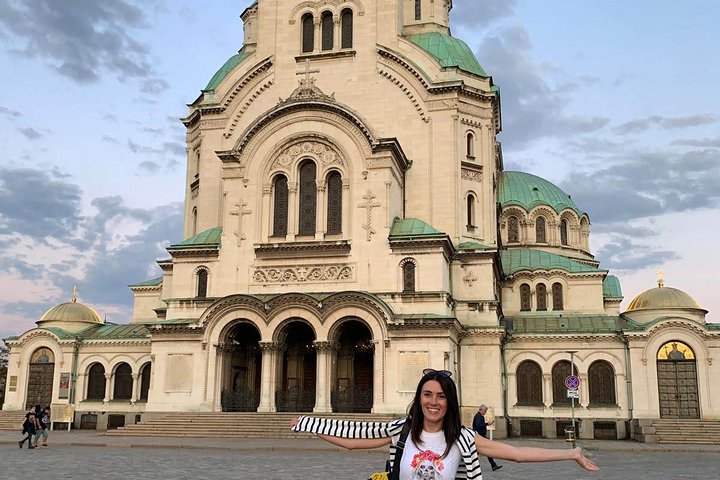
Sofia, a city that has long intrigued me, finally called me to its cobblestone streets. The promise of a whirlwind tour through its storied past was too tempting to resist. As I stood before the majestic St. Alexander Nevsky Cathedral, the starting point of the Sofia Landmarks Tour, I felt the weight of history pressing down on me. This was not just a tour; it was a journey through time.
Our guide, Yoan, was a masterful storyteller, weaving tales of ancient Thracian civilizations, Ottoman rule, and the dramatic events of the 20th century. His passion for Sofia’s history was palpable, and his background in law lent a unique perspective to his narratives. As we moved from one landmark to another, I found myself not just learning about Sofia, but feeling its pulse, its struggles, and its triumphs.
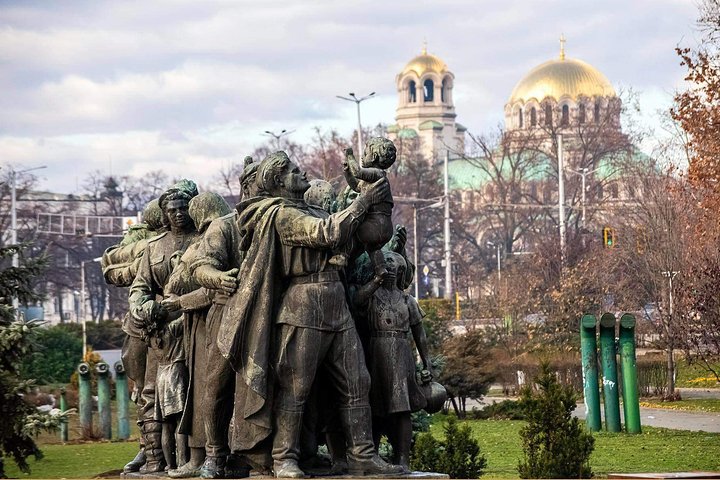
The tour was a tapestry of Sofia’s past, each thread a different era, each knot a significant event. From the ancient Roman ruins to the poignant Monument to the Unknown Warrior, every stop was a reminder of the city’s resilience. Yoan’s commentary was the thread that tied it all together, making the complex history accessible and engaging.
Echoes of the Past
As we walked through the city, I was struck by the layers of history that Sofia wears like a cloak. The Basilica of Saint Sofia, the church that gave the city its name, stood as a testament to the city’s enduring spirit. Nearby, the Saint Nikolas Russian Church, with its promise of wish fulfillment, added a touch of mysticism to our journey.
The National Art Gallery, housed in the former Royal Palace, was a reminder of Bulgaria’s royal past, while the yellow cobblestones surrounding it whispered stories of bygone eras. The City Garden, with its youthful energy, was a stark contrast to the solemnity of the Ivan Vazov National Theater, dedicated to Bulgaria’s most beloved author.
Each landmark was a chapter in Sofia’s story, and as we moved from one to the next, I felt a deep connection to the city. The Rotunda Church of St. George, Sofia’s oldest building, was a hidden gem, a relic of the city’s Roman past. The National Institute of Archaeology, once a mosque, now stood as a symbol of Sofia’s diverse history.
A Journey of Discovery
The tour was not just about history; it was a journey of discovery, both of the city and of myself. As we tasted the mineral spring water, believed to have healing powers, I felt a sense of renewal. The Sofia Synagogue, the largest on the Balkan peninsula, was a testament to the resilience of the Bulgarian Jewish community, while the Banya Bashi Mosque told the story of the Bulgarian Muslim community.
The ancient Serdica Archaeological Complex, hidden beneath Sofia’s modern center, was a reminder of the city’s ancient roots. The Sofia Monument, with its controversial history, stood as a symbol of the city’s complex identity. The Catholic Cathedral of St. Joseph and St. Nedelya Church, each with their own stories of tragedy and triumph, added depth to our journey.
As the tour concluded at Vitosha Boulevard, Sofia’s main pedestrian street, I felt a sense of completion. The tour had been a whirlwind, but it had also been a journey of introspection. Sofia, with its layers of history and culture, had offered me a glimpse into its soul, and in doing so, had helped me discover a part of my own.