Exploring the Timeless Wonders of Sigiriya and Polonnaruwa
Drawn by the allure of Sri Lanka’s ancient wonders, I embarked on a journey to Sigiriya and Polonnaruwa, eager to explore the rich cultural heritage of this island nation. Join me as I delve into the stories of kings and kingdoms, art and architecture, and the enduring spirit of Sri Lanka.



The Enigmatic Sigiriya: A Journey Through Time
As I embarked on my journey to Sigiriya, I was filled with anticipation and a sense of wonder. Known as the Lion’s Rock, this ancient rock fortress is a testament to the ingenuity and artistry of ancient Sri Lankan civilization. The fortress, built by King Kassapa, stands majestically amidst lush gardens and serene ponds, offering a glimpse into a bygone era.
Upon arrival, I was immediately struck by the grandeur of the rock itself. Rising nearly 200 meters above the surrounding landscape, Sigiriya is a marvel of nature and human craftsmanship. The climb to the top, though challenging, was a journey through history. As I ascended, I was greeted by the famous frescoes of the “Heavenly Maidens,” their vibrant colors still vivid after centuries. These paintings, along with the mirror wall, are a testament to the artistic prowess of the ancient Sinhalese.
Reaching the summit, I was rewarded with a panoramic view of the surrounding countryside. The ruins of the palace, with its intricate water gardens and ancient structures, told stories of a time when Sigiriya was a thriving center of culture and power. It was a moment of reflection, a reminder of the impermanence of human achievements and the enduring beauty of nature.
Polonnaruwa: A Glimpse into Sri Lanka’s Glorious Past
After the awe-inspiring experience at Sigiriya, my journey continued to Polonnaruwa, another jewel in Sri Lanka’s rich historical tapestry. Once the thriving capital of the central plains, Polonnaruwa is now an archaeological treasure trove, offering insights into the island’s illustrious past.
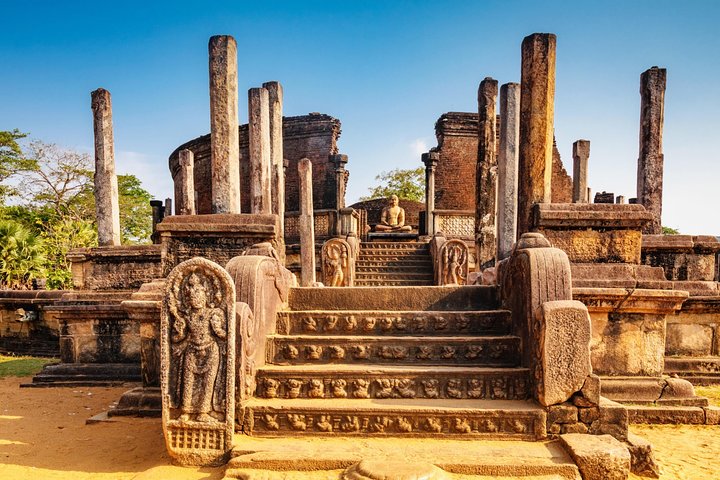
Walking through the ancient city, I was transported back in time. The Quadrangle, with its impressive collection of temples, stupas, and statues, was a highlight of my visit. Each structure, with its unique architectural style, told a story of devotion and reverence. The Gal Vihara, with its colossal Buddha statues carved into granite, was particularly striking. The serene expressions of the Buddhas seemed to convey a sense of peace and tranquility, inviting contemplation and introspection.
As I explored the ruins, I couldn’t help but marvel at the advanced engineering and architectural skills of the ancient builders. The city’s layout, with its well-planned streets and sophisticated irrigation systems, spoke of a civilization that was both innovative and forward-thinking. It was a humbling experience, a reminder of the rich cultural heritage that continues to shape Sri Lanka’s identity.
Embracing the Spirit of Sri Lanka
My journey through Sigiriya and Polonnaruwa was more than just a tour of ancient ruins; it was an immersion into the soul of Sri Lanka. The stories of kings and kingdoms, of art and architecture, came alive as I walked through these historic sites. It was a journey that deepened my appreciation for the island’s cultural richness and diversity.
Throughout my travels, I was struck by the warmth and hospitality of the Sri Lankan people. Their pride in their heritage was evident in every interaction, from the knowledgeable guides who shared the history of their land to the locals who welcomed me with open arms. It was a reminder of the importance of preserving and celebrating cultural heritage, not just for the sake of history, but for the future generations who will inherit this legacy.
As I left Sri Lanka, I carried with me memories of a land steeped in history and tradition, a place where the past and present coexist in harmony. It was a journey that enriched my understanding of Asia’s cultural landscape, and one that I will cherish for years to come.


