Exploring Cambodia’s Heartbreaking History: A Journey Through S-21 and the Killing Fields
Intrigued by the profound history of Cambodia, I embarked on a journey to explore the S-21 Prison and Killing Fields. This tour promised a deeply moving experience, and it delivered in ways I could never have imagined.


A Journey into Cambodia’s Heartbreaking Past
As I embarked on the S-21 Prison and Killing Fields Tour, I was filled with a sense of solemn anticipation. Having grown up in a multicultural household, I have always been drawn to understanding the complex layers of history and culture that shape a nation. This tour promised to be a deeply moving experience, and it did not disappoint.
Our journey began with a visit to the Choeung Ek Genocidal Center, commonly known as the Killing Fields. The drive from Phnom Penh was a quiet one, as our guide, Smiley, prepared us for what we were about to witness. His knowledge and passion for sharing Cambodia’s history were evident, and his ability to convey the gravity of the events that took place here was remarkable.
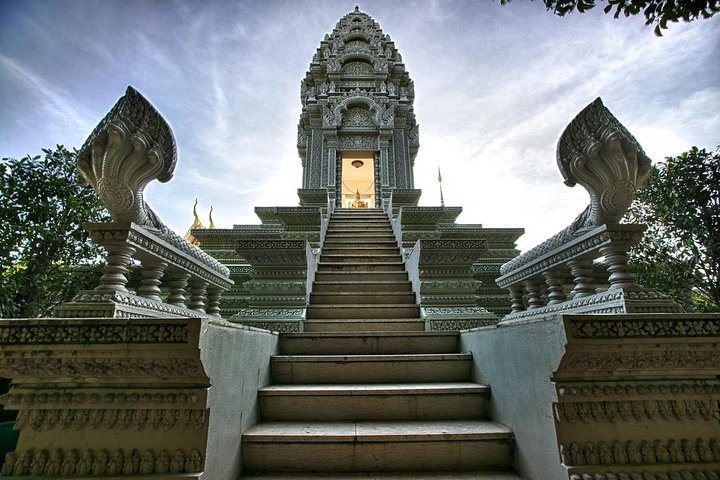
Walking through the fields, I was struck by the serene beauty of the landscape, a stark contrast to the horrors that occurred here. Smiley’s detailed explanations helped us grasp the magnitude of the Khmer Rouge’s atrocities, and I found myself reflecting on the resilience of the Cambodian people. The memorial stupa, filled with the skulls of victims, served as a haunting reminder of the past, urging us never to forget.
The Harrowing Truths of S-21
Our next stop was the Tuol Sleng Genocide Museum, formerly a high school turned into a prison by the Khmer Rouge. Known as S-21, it became the largest center of detention and torture in the country. As we entered the gates, I felt a chill run down my spine, knowing the suffering that took place within these walls.
Smiley guided us through the museum, sharing stories of the prisoners and the brutal conditions they endured. The photographs of the victims, displayed in the former classrooms, were a poignant reminder of the human cost of tyranny. It was a sobering experience, one that left me with a profound sense of empathy and a desire to honor the memories of those who suffered.
Meeting the two remaining survivors of S-21 was an unexpected and humbling experience. Their resilience and willingness to share their stories were inspiring, and I felt privileged to have had the opportunity to hear their firsthand accounts. It was a moment that will stay with me forever, a testament to the strength of the human spirit.
Reflecting on a Nation’s Resilience
As the tour concluded, I found myself reflecting on the importance of remembering and learning from the past. The S-21 Prison and Killing Fields Tour provided a unique opportunity to engage with Cambodia’s history in a way that reading alone could never achieve.
The experience was both heartbreaking and enlightening, offering a deeper understanding of the cultural and historical context that continues to shape Cambodia today. It reminded me of the importance of cultural immersion and the role it plays in fostering empathy and connection across borders.
For those seeking to explore the rich tapestry of Asia’s history, this tour is an essential journey. It challenges us to confront uncomfortable truths and encourages us to reflect on our shared humanity. As I left Phnom Penh, I carried with me a renewed commitment to honoring the past and a deeper appreciation for the resilience of the Cambodian people.