



Considered to be off-limits for years due to the civil war, the gates to culture filled Jaffna are open to adventurers once more. Discover Tamil culture in this colourful city
Considered to be off-limits for years due to the civil war, the gates to culture filled Jaffna are open to adventurers once more. Discover Tamil culture in this colourful city
NEGOMBO
Negombo Beach - Located just six kilometers from Sri Lanka’s International Airport, Negombo is a charming, predominantly Christian fishing town. It features narrow streets, quaint boutiques, and numerous historic churches, tracing its roots back to the Portuguese arrival. Negombo is perfect for experiencing traditional Sri Lankan fishing…
NEGOMBO
Negombo Beach - Located just six kilometers from Sri Lanka’s International Airport, Negombo is a charming, predominantly Christian fishing town. It features narrow streets, quaint boutiques, and numerous historic churches, tracing its roots back to the Portuguese arrival. Negombo is perfect for experiencing traditional Sri Lankan fishing methods, such as the outrigger canoe and the swift catamaran. The lagoon is renowned for its pomfret, lagoon crab, and lobster during the season. This resort town is dotted with hotels and restaurants, and the famous lagoon offers rides in outrigger sailing canoes, providing an authentic glimpse into a fisherman’s life.
ANURADHAPURA
Anuradhapura - Anuradhapura is a city in the Anuradhapura District of Sri Lanka’s North Central Province. This sacred city was founded around a cutting from the ‘tree of enlightenment,’ the Buddha’s fig tree, brought here in the 3rd century B.C. by Sanghamitta, the founder of an order of Buddhist nuns. Anuradhapura, a political and religious capital of Ceylon for 1,300 years, was abandoned after an invasion in 993. Hidden in dense jungle for many years, the magnificent site, with its palaces, monasteries, and monuments, is now accessible once more.
Jaffna
Jaffna - Jaffna, a port in northern Sri Lanka, is located on a flat, dry peninsula at the island’s northern tip. It serves as a trading center for the peninsula’s agricultural produce and nearby islands, connected to the rest of the country by road and railway. Although no longer a major port, Jaffna maintains some trade with southern India, with fishing playing a vital role in the economy.
Jaffna was the capital of a Tamil kingdom for centuries before European conquest, and the city retains many distinctive Tamil cultural features. Jaffna fell under Portuguese rule in 1619 and was their last possession in Ceylon (Sri Lanka) before the Dutch captured it in 1658. The name Jaffna is a Portuguese adaptation of a Tamil word meaning “port of the lyre.” A fort and a church remain from the Dutch period, and near the fort is the famous Hindu temple, Kandaswamy Kovil. The British held Jaffna from 1795 until they relinquished control of the island in 1948.
Trincomalee
Trincomalee - Trincomalee (Trinco) boasts one of the world’s finest natural harbors. This historic city is ancient beyond measure, possibly the site of historic Gokana in the Mahavamsa (Great Chronicle), and its Shiva temple is the site of Trikuta Hill in the Hindu text Vayu Purana. It is an excellent stopover on the way to the nearby beaches of Uppuveli and Nilaveli.
Trincomalee’s exceptional deep-water port has made it a target for numerous attacks over the centuries. By the British takeover in 1795, the city had changed colonial hands seven times. Visitors can easily spend a day or more exploring the various waterfronts, the fort, and its renowned temple.
Polonnaruwa
Polonnaruwa - Polonnaruwa is the second-largest city in Sri Lanka’s North Central Province. The ancient city of Polonnaruwa has been designated a UNESCO World Heritage site. Polonnaruwa has a rich history of conquest and struggle, forming the third element in the Cultural Triangle. Located about 140 km northeast of Kandy, Polonnaruwa offers endless enjoyment for history and culture enthusiasts, with numerous significant sights.
Much of the existing ruins are credited to King Parakrama Bahu I, who invested royal resources in town planning, including parks, edifices, and irrigation systems. His reign is considered a golden age, where the kingdom thrived under a visionary ruler. The Parakrama Samudra is a massive tank named after its patron. The popular King’s Royal Palace, the Audience Hall surrounded by beautifully carved stone elephants, and the Bathing Pool reflect the superior engineering capabilities of the time.
Sigiriya
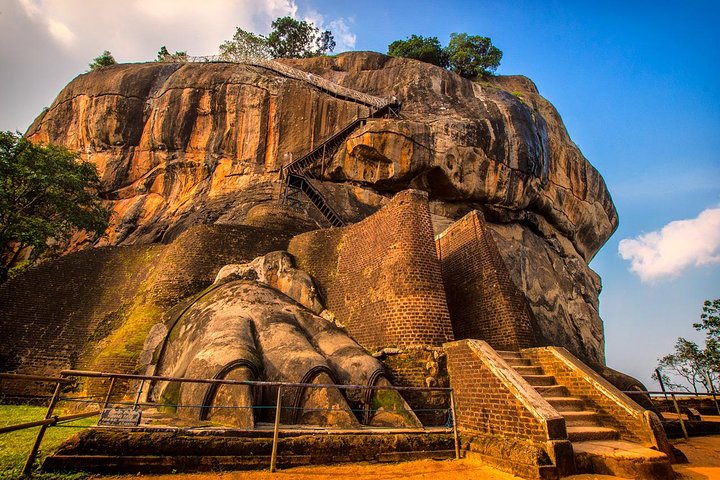
Sigiriya The Ancient Rock Fortress - Sigiriya, also known as the Lion’s Rock, is a rock fortress and palace located in Sri Lanka’s Matale district. This ruin is surrounded by gardens, ponds, and other structures. Built by King Kassapa, Sigiriya is a World Heritage site and the best-preserved city center in Asia.
Kaudulla National Park - Sri Lanka boasts over 26 national parks, and going on a safari is a popular activity during a typical Sri Lanka route. Kaudulla National Park is one of the best places to spot elephants in Sri Lanka. It is home to over 200 elephants, monkeys, crocodiles, and even a few leopards. Opened in 2002, the park is surrounded by grasslands and can be visited year-round to see elephants and other wildlife. Discover why this is the best national park in Sri Lanka.
Pidurangala Rock - While Sigiriya Rock is rich in history with dramatic features like the lion’s paw and the mirror wall, Pidurangala Rock offers a more natural feel, despite also housing a temple. Adjacent to Sigiriya Rock, Pidurangala is the best viewing spot of Sigiriya Rock, being only slightly lower. Pidurangala is a popular sunrise spot, offering 360-degree views of the valleys and Sigiriya Rock. Travelers often enjoy sunrise at Pidurangala and then head to Sigiriya Rock for sunset.
Golden Temple of Dambulla - The stunning Royal Rock Temple complex is located about 160m above the road in southern Dambulla. Five separate caves contain approximately 150 breathtaking Buddha statues and paintings, some of Sri Lanka’s most significant and evocative religious art. Buddha images were first created here over 2000 years ago, with subsequent kings adding to and embellishing the cave art over the centuries.
Kandy
Kandy View Point - Known as the highest point in Kandy, this breathtaking spot offers a high-angle view of the magnificent city. It’s so relaxing that visitors may want to sit and admire the fascinating view below all day. It’s not far from the lake, just within walking distance. A proper place has been built to view the gorgeous scenery, making it a must-visit with a camera to capture stunning photos and videos.
Royal Botanical Gardens - These beautiful gardens were once reserved exclusively for Kandyan royalty. Today, everyone can enjoy the most impressive and largest (60 hectares) botanic gardens in Sri Lanka. Highlights include a fine collection of orchids, a stately avenue of royal palms, the extraordinary cannonball fruit tree, and 40m-high Burma bamboo. Another major attraction is the giant Javan fig tree on the great lawn, with its colossal central trunk and umbrella-like canopy of branches. Peradeniya is 6km from central Kandy.
Temple of the Sacred Tooth Relic - The golden-roofed Temple of the Sacred Tooth houses Sri Lanka’s most important Buddhist relic – a tooth of the Buddha. During puja (offerings or prayers), the heavily guarded room housing the tooth is open to devotees and tourists. However, the tooth itself is not visible, as it is kept in a gold casket shaped like a dagoba (stupa), containing a series of six dagoba caskets of diminishing size. In addition to the revered main temple, the complex includes a series of smaller temples, shrines, and museums.
Kandy Lake Club - Cultural Dance Show - The Kandy Lake Club Cultural Dance Show is an exhilarating Sri Lankan Arts, Dance & Cultural Heritage Show that is a must-see for any visitor to the historic city of Kandy. Established in 1982, the Kandy Lake Club Dance brings together all Sri Lankan dance types on one platform. It is the first Cultural Dance Show of its kind in Sri Lanka and has become a tourist attraction for many visitors interested in the country’s rich cultural heritage. It has been performed continuously for the last 35 years.
Colombo
Embilmeegama Tea Factory - Giragama Tea Factory is one of the oldest in Sri Lanka. The famous English “cuppa” might have been stronger if not for the 1865 coffee blight. Old Ceylon’s up-country plantations were devastated, but the pioneering planters’ spirits remained high. They introduced tea cultivation and never looked back. Visitors can explore a tea plantation and observe how the plant is grown and harvested. From there, they can visit a factory to learn about the entire processing procedure and how different types of teas are created.
Colombo to Airport
Colombo National Museum - The National Museum of Natural History covers Sri Lanka’s natural heritage. Located near the National Museum of Colombo, it was established on September 23, 1986, and is the only museum in Sri Lanka representing natural history and natural heritage.

- Private transportation
- On-board WiFi
- Bottled water
- In-vehicle air conditioning
- Private transportation
- On-board WiFi
- Bottled water
- In-vehicle air conditioning
- Other
- Other
For a full refund, cancel at least 24 hours before the scheduled departure time.
For a full refund, cancel at least 24 hours before the scheduled departure time.


