Unveiling the Spiritual Essence of Luxor’s Temples: A Journey Through Time
Drawn by the allure of ancient Egyptian history, I embarked on a journey to Luxor’s East Bank, eager to explore the legendary Karnak and Luxor Temples. Join me as I delve into the spiritual essence of these magnificent sites, uncovering the stories etched in stone and the timeless connections that bind us all.


A Journey Through Time: The Majestic Karnak Temple
As I embarked on the Luxor East Bank Tour of Luxor’s East Bank, I was filled with anticipation. The stories of ancient Egyptian grandeur had always fascinated me, and now I was about to witness them firsthand. Our journey began with a visit to the Karnak Temple, a place that stands as a testament to the devotion and craftsmanship of ancient Egypt.
The moment I stepped into the Karnak Temple complex, I was enveloped by a sense of awe. The towering columns, adorned with intricate hieroglyphics, seemed to whisper the secrets of a bygone era. Our guide, Ali, was a wellspring of knowledge, weaving tales of gods and pharaohs that brought the temple to life. As I wandered through the sacred sanctuaries, I felt a profound connection to the spiritual essence of the place. It was as if the stones themselves were alive, resonating with the prayers and rituals of those who had come before.
The heat of the day was intense, a reminder of the harsh yet beautiful landscape of Egypt. Yet, the experience was invigorating, a pilgrimage of sorts that transcended the physical discomfort. I found myself lost in contemplation, reflecting on the enduring legacy of a civilization that had shaped the course of history. The Karnak Temple was not just a monument; it was a living testament to the human spirit’s quest for meaning and transcendence.
The Enchanting Luxor Temple: A Dance of Light and Shadow
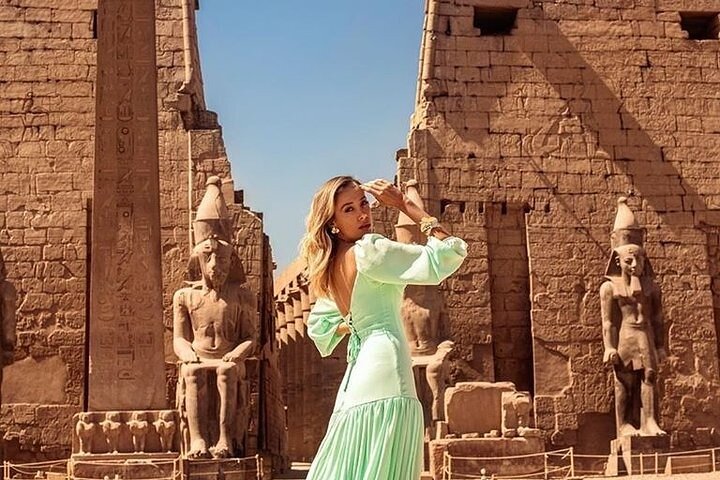
Our next destination was the Luxor Temple, a place that exudes a different kind of magic. Built during the illustrious 18th Dynasty, the temple is a masterpiece of ancient architecture, a symphony of stone and artistry. As we approached, the sun cast long shadows across the colossal statues, creating a dance of light and shadow that seemed to animate the figures.
Walking through the temple, I was struck by the exquisite carvings that adorned the walls. Each figure, each symbol, told a story of devotion and power, a narrative etched in stone for eternity. Ali’s insights into the historical significance of the temple added depth to the experience, allowing me to appreciate the intricate interplay of culture and religion that defined ancient Egypt.
The Luxor Temple was a place of reflection, a sanctuary where the past and present converged. As I stood before the towering obelisks, I felt a sense of reverence, a connection to the countless souls who had walked these paths before me. It was a reminder of the timeless nature of human aspiration, a journey that transcends the boundaries of time and space.
Reflections on a Spiritual Pilgrimage
As our tour of Luxor’s East Bank came to a close, I found myself reflecting on the profound impact of the experience. The temples of Karnak and Luxor were more than just historical sites; they were gateways to a deeper understanding of the human spirit’s quest for connection and meaning.
The journey had been a pilgrimage, a spiritual exploration that resonated with my own quest for understanding. It was a reminder of the rich tapestry of history and culture that defines the Middle East, a region that continues to inspire and captivate.
In the end, the Luxor East Bank Tour was not just a tour; it was an enriching journey through time and culture, a testament to the enduring legacy of ancient Egypt. As I returned to my family, I carried with me the stories and insights that would enrich our own spiritual journey, a reminder of the timeless connections that bind us all.