



Discover Zen Buddhism and Japanese philosophy on a private tour with a licensed guide. Enrich your travel and life with deep insights.
Discover Zen Buddhism and Japanese philosophy on a private tour with a licensed guide. Enrich your travel and life with deep insights.
-
Higashi Hongan-ji Temple - Question: What is the “Pure Land,” a key concept in Japanese Buddhism?
Explore the Japanese “Pure Land” Buddhist Philosophy:
Situated about a 10-minute walk from Kyoto Station, this temple serves as the head temple for one of the Japanese Pure Land Buddhism sects. Pure Land Buddhist philosophy has significantly influenced…
- Higashi Hongan-ji Temple - Question: What is the “Pure Land,” a key concept in Japanese Buddhism?
Explore the Japanese “Pure Land” Buddhist Philosophy:
Situated about a 10-minute walk from Kyoto Station, this temple serves as the head temple for one of the Japanese Pure Land Buddhism sects. Pure Land Buddhist philosophy has significantly influenced Japanese intellectual and social history, although it is less recognized in the West compared to Zen philosophy’s impact on Japanese culture.
Unlike Zen Buddhism, which was favored by the upper classes, Pure Land Buddhism was embraced by the common people. It presents unique ideas about heaven, eschatology, and the salvation of those burdened by sin. This is why Karl Barth described it as the form of paganism most akin to Christianity.
- Yoshida Shrine - Question: What is Shintoism?
Experience Japanese Shintoist “pantheism” philosophy:
Yoshida Shrine, one of Kyoto’s oldest shrines, was the government-sanctioned headquarters of Japanese Shintoism until 150 years ago, though it is less renowned today. While Japanese Shinto is generally linked with animism, Yoshida Shrine is noted for developing a pantheistic Shinto philosophy from animism, regarded as the most philosophically advanced Shintoism by Japanese scholars and researchers. This is a favorite spot to deeply experience Shintoism teachings more than anywhere else.
- Ginkakuji Temple - Question: What is the background of the Japanese “simple is the best” philosophy?
Discover the charm of simplicity:
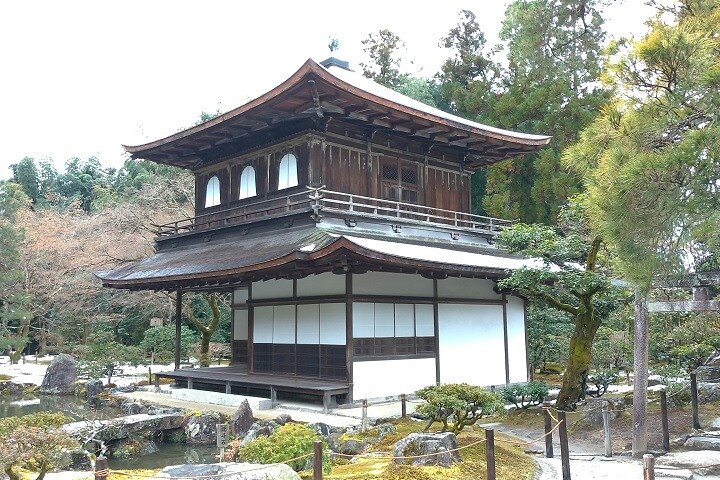
This Zen temple, a UNESCO World Heritage site in Kyoto, was built around 550 years ago and is renowned as the birthplace of the Japanese “simple is the best” culture. Despite its name, the temple is not silver but dark, allowing visitors to appreciate the depth of shabbiness that underpins Japanese culture’s preference for simplicity.
After visiting this temple, enjoy a meal at a nearby restaurant along the approach to Ginkakuji Temple.
- Philosopher’s Walk - Question: How did Japanese philosophers engage with Western philosophical traditions?
Experience Japanese modern philosophy with a philosophy researcher:
The Philosopher’s Path, a well-loved walking route of about 1.5 km (just under a mile), is famous for Kitaro NISHIDA, a unique 20th-century Japanese philosopher. He is recognized as a pioneer of modern Japanese philosophy, blending Western and Japanese Zen philosophies to create a distinctive philosophical system. Here, a guide will introduce his philosophy, allowing you to deepen your understanding of Japanese religion and philosophy.
The path’s vicinity also features unique spots related to Japanese folk beliefs and Buddhism, offering a leisurely walk with opportunities to explore these hidden gems.
- Nanzenji Suirokaku - Question: What is the ideal landscape protection?
Learn about philosophical thinking:
The Suirokaku Aqueduct, a Western-style brick structure within a traditional Buddhist temple, was constructed as part of Japan’s modernization efforts. It offers a unique charm by blending Japanese and Western atmospheres, making it popular on social media platforms like Instagram. Additionally, it provides a philosophical perspective, as the Western-style construction in a traditional sacred space sparked debates on tradition, landscape preservation, and globalism, serving as excellent material for philosophical and ethical reflection.
- Nanzen-ji Sammon Gate - Question: What is the theory of enlightenment in Buddhism?
Experience the “three steps for awakening”:
Sanmon Gate, meaning “a gate representing three steps to liberation,” is a two-story structure. Inside, visitors must climb steep steps, but from the second floor, they can enjoy a stunning city view and perhaps achieve enlightenment, as it symbolizes the “steps” one must take to become enlightened.
- Konchi-in - Question: What does an authentic Zen garden look like?
Deepen your understanding of Japanese religious concepts:
This Zen temple is well-known among Japanese history enthusiasts. The garden, “Tsurukame no Niwa,” is highly regarded as one of Japan’s most authentic Zen gardens.
Additionally, the mausoleum of Tokugawa Ieyasu, the inspiration for Yoshii Toranaga, the main character in the drama “Shogun,” is located within the temple. Observing Ieyasu’s tomb, which is in a temple but buried in the Shinto style, will enhance your understanding of Japan’s religious traditions.

- Guide Fee
- Guide Fee
- Lunch
- Entrance Fees for temples (for your flexibility and transparency). Please prepare CASH!
- Public transportation (bus, subway, cable car, etc.)
- Lunch
- Entrance Fees for temples (for your flexibility and transparency). Please prepare CASH!
- Public transportation (bus, subway, cable car, etc.)
“Beyond sightseeing—A journey of thought, dialogue, and rediscovery.”
This exceptional tour is conducted by a nationally licensed guide who is also an experienced philosophy researcher. Throughout the journey, participants will gain a profound understanding of Zen Buddhism and a wide range of Japanese intellectual and spiritual traditions, spanning from…
“Beyond sightseeing—A journey of thought, dialogue, and rediscovery.”
This exceptional tour is conducted by a nationally licensed guide who is also an experienced philosophy researcher. Throughout the journey, participants will gain a profound understanding of Zen Buddhism and a wide range of Japanese intellectual and spiritual traditions, spanning from ancient philosophies to contemporary thought.
In contrast to standard guided tours, this experience provides an intellectually stimulating journey through reflection and meaningful dialogue. Together, the guide and guests delve into the deeper significance of Kyoto’s landscapes, employing philosophical inquiry to reveal layers of cultural and historical insight.
Anticipate enlightening conversations and fresh perspectives that may linger long after the tour concludes—enhancing not only the travel experience but potentially enriching personal or professional life as well.
Shall we walk, think, and rediscover Kyoto—through the lens of philosophy?
- Of the remaining 2 hours and 45 minutes, 1 hour is alloted for a lunch break and the 1 hour and 45 minutes as time for backstreet walking around the spots and public transportation.
- The itinerary of this tour includes a two-story building with only stairs.
- The itinerary includes walking on the path for about one mile.
For a full refund, cancel at least 24 hours before the scheduled departure time.
For a full refund, cancel at least 24 hours before the scheduled departure time.