Unveiling the Mysteries of Siem Reap’s Ancient Temples
Embarking on a journey through the ancient temples of Siem Reap, I was captivated by the rich history and cultural insights shared by our guide, Hok. His knowledge of Cambodian religious history and the intricate carvings of the temples brought the past to life, leaving me with a deeper appreciation for the Khmer civilization.


A Journey Through Time: The Roluos Temples
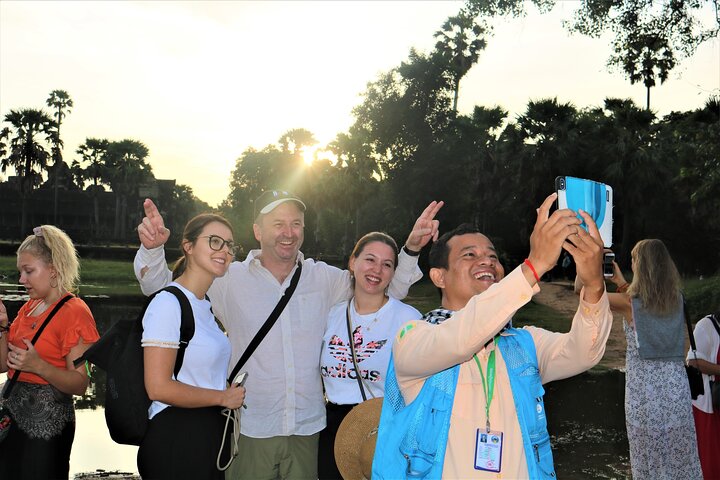
As I embarked on the Siem Reap Temples Exploration, I was filled with anticipation. The Roluos temple group, a collection of ancient temples predating the renowned Angkor Wat, was our first destination. Our guide, Hok, was a fountain of knowledge, weaving tales of the Khmer Empire’s early days with the ease of a master storyteller. His passion for Cambodian history was infectious, and I found myself hanging on his every word.
The temples of Lolei, Preah Ko, and Bakong stood as silent witnesses to a bygone era. Each temple, with its unique architectural style, told a story of devotion and artistry. Hok’s explanations of the intricate carvings and their significance in Khmer culture were enlightening. It was as if he had carved them himself, such was his familiarity with every detail. The transition from brick to sandstone construction was a testament to the ingenuity and evolution of early Khmer architecture.
Walking through these ancient structures, I felt a deep connection to the past. The serenity of the surroundings allowed for a moment of reflection, a chance to appreciate the rich tapestry of history that Cambodia offers. It was a humbling experience, one that left me with a profound respect for the Khmer civilization.
The Enchantment of Angkor Archaeological Park
After exploring the Roluos temples, we made our way to the Angkor Archaeological Park. The park, with its serene and uncrowded setting, was a stark contrast to the bustling city of Siem Reap. Here, the temples of Neak Pean, Preah Khan, and Banteay Samre awaited us, each with its own unique charm.
Neak Pean, with its central pool and surrounding smaller pools, was a marvel of ancient engineering. Hok explained the symbolism behind the design, where each pool represented one of the fundamental elements: Water, Earth, Fire, and Wind. This temple, originally designed for medicinal purposes, reflected the ancient belief in the healing power of water. It was a reminder of the Khmer’s deep connection to nature and their understanding of balance and harmony.
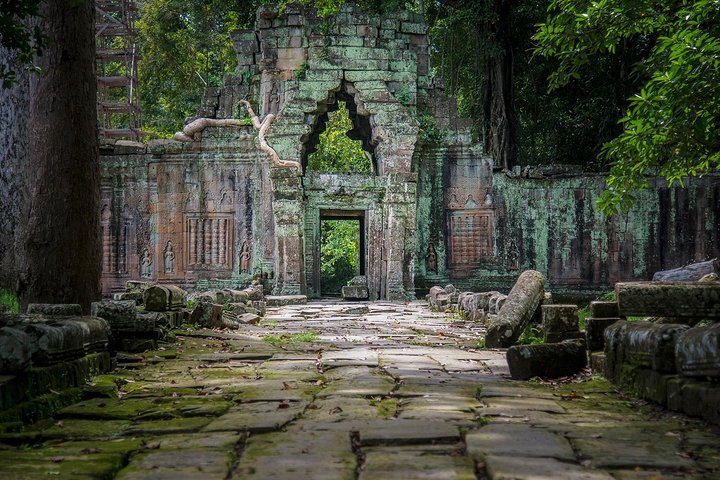
Preah Khan, a sacred temple dedicated to King Jayavarman VII’s father, was a center of learning and culture. As we wandered through its corridors, Hok shared stories of its past as a University of Fine Arts and Culture. The temple’s original ruins, surrounded by lush greenery, were a testament to the architectural prowess of the Khmer Empire. It was a place where history and nature coexisted in perfect harmony.
Reflections on a Cultural Odyssey
The day concluded with a visit to Banteay Samre, a temple renowned for its well-preserved stone carvings and tranquil atmosphere. As the sun set, casting a golden hue over the temple, I took a moment to reflect on the day’s journey. The exploration of these ancient sites was more than just a tour; it was a cultural odyssey that enriched my understanding of Cambodia’s heritage.
Hok’s insights into Cambodian culture and history were invaluable. His ability to bring the past to life through stories and explanations made the experience truly unforgettable. I left the temples with a deeper appreciation for the Khmer civilization and a sense of gratitude for the opportunity to witness such historical treasures.
This journey through the temples of Siem Reap was a reminder of the importance of preserving our cultural heritage. It was a call to mindfulness, to appreciate the beauty and wisdom of ancient civilizations, and to carry their lessons into our modern lives. I highly recommend this exploration to anyone seeking a deeper connection to Cambodia’s rich history and culture.