Crafting Memories: My Zabuton Making Experience in Koto City
In search of a deeper connection to my Japanese heritage, I embarked on a journey to Koto City to learn the art of zabuton making. This experience promised not only new skills but a profound appreciation for the craftsmanship behind traditional Japanese products.




A Journey into the Heart of Japanese Craftsmanship
As I stepped into the serene environment of Futon Tokyo, nestled in the heart of Koto City, I was immediately enveloped by a sense of calm and tradition. The tatami mats beneath my feet whispered stories of centuries past, and the gentle hum of craftsmen at work filled the air. This was not just a workshop; it was a living testament to the art of Japanese futon making.
The experience began with a warm welcome from the small, yet incredibly skilled staff. Their passion for their craft was evident in every gesture and word, even as they spoke in Japanese. Thankfully, translators were on hand to bridge any language gaps, ensuring that the rich knowledge of the futon craftsmen was accessible to all.
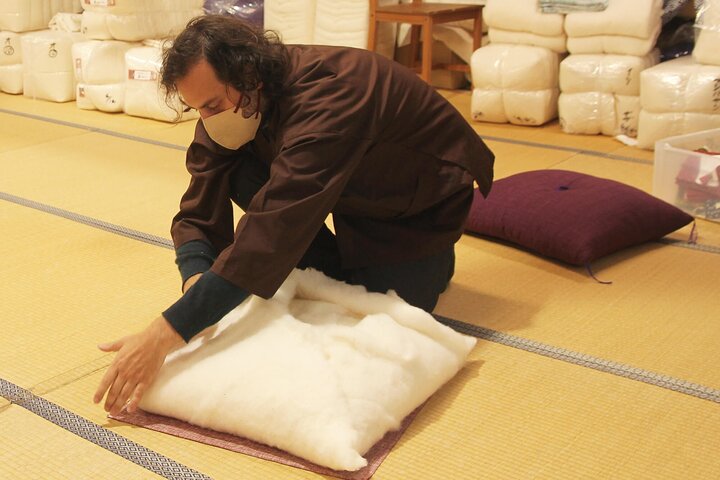
The sensei, a master of his trade, guided us through the intricate process of zabuton making. His hands moved with a grace and precision that spoke of years of dedication. As I watched him lay the cotton on the fabric, I was reminded of the delicate balance between tradition and innovation that defines so much of Japanese culture.
The Art of Zabuton Making
The process of creating a zabuton is both meditative and enlightening. It begins with the careful layering of natural cotton, each piece meticulously placed to ensure the perfect balance of comfort and support. As I tore the cotton and laid it on the fabric, I felt a deep connection to the materials and the history they represented.
The sensei’s instructions were clear and patient, allowing me to immerse myself fully in the task at hand. With each fold and tuck, I could feel the zabuton taking shape, a tangible representation of the skills I was acquiring. The act of wadding, or folding the cotton into the fabric, was particularly satisfying, as it required both precision and intuition.
As the workshop progressed, I found myself lost in the rhythm of the work, the outside world fading away. The experience was not just about learning a new skill, but about embracing a way of life that values patience, attention to detail, and respect for tradition.
A Souvenir of Skill and Tradition
As the session drew to a close, I held in my hands a beautifully crafted zabuton, a testament to the time and effort invested in its creation. The sense of accomplishment was profound, knowing that I had not only learned a new skill but had also gained a deeper appreciation for the craftsmanship that goes into every Japanese product.
The zabuton was carefully placed in a classic kimono-style bag, a thoughtful touch that added to the authenticity of the experience. As I left Futon Tokyo, I felt a renewed sense of connection to my Japanese heritage and a profound respect for the artisans who keep these traditions alive.
For anyone seeking a deeper understanding of Japanese culture, or simply looking to try their hand at a unique craft, I cannot recommend this experience enough. The skills and memories gained at Futon Tokyo are treasures that will stay with me for a lifetime. Zabuton Making Experience