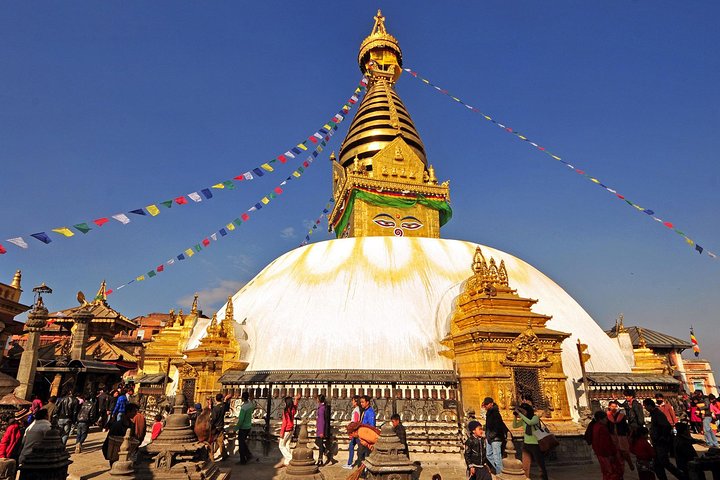
Unveiling the Timeless Beauty of Kathmandu’s Durbar Squares
Eager to delve into the rich tapestry of Nepal’s history, I embarked on a private tour of Kathmandu’s three Durbar Squares. What I discovered was a journey through time, art, and culture that left me in awe.


A Journey Through Time: Kathmandu Durbar Square
As I embarked on my journey through the Kathmandu Valley, I was immediately struck by the vibrant tapestry of history and culture that awaited me. My first stop was the Kathmandu Durbar Square, a UNESCO World Heritage Site that stands as a testament to Nepal’s rich past. The square, once the royal palace of the Malla kings and later the Shah dynasty, is a treasure trove of art and culture. The intricate wooden carvings and ancient temples transport you back in time, offering a glimpse into the lives of those who once walked these grounds.
The highlight of this square is undoubtedly the Kumari Ghar, the residence of the Living Goddess Kumari. As I stood before this sacred site, I couldn’t help but feel a deep sense of reverence for the traditions that have been preserved through the centuries. The guide, Sarita Karki, was instrumental in bringing the history of this place to life. Her ability to break down complex historical narratives into digestible stories made the experience both educational and engaging. I found myself captivated by her tales of the Malla kings and the architectural marvels they left behind.
The Artistic Heart of Patan Durbar Square
A short drive from Kathmandu brought me to Patan Durbar Square, another UNESCO-listed site renowned for its exquisite Newar architecture. The square is a harmonious blend of temples, shrines, and courtyards, each adorned with intricate woodwork and stone carvings. As someone who grew up in a multicultural household, I have always been fascinated by the way different cultures express themselves through art and architecture. Patan Durbar Square did not disappoint.
The Patan Museum, located within the square, is a treasure trove of ancient artifacts and art. As I wandered through its halls, I was reminded of the importance of preserving cultural heritage. The museum’s collection offers a window into the artistic traditions of the Newar people, showcasing their skill and creativity. Sarita’s insights into the cultural significance of each piece added depth to my understanding, making the experience all the more enriching.
Bhaktapur Durbar Square: A Glimpse into Medieval Grandeur
The final stop on my tour was Bhaktapur Durbar Square, a place that truly embodies Nepal’s medieval grandeur. The square is home to some of the most impressive palaces and temples I have ever seen, including the 55-Window Palace and the Nyatapola Temple. The well-preserved architecture and vibrant street life make Bhaktapur a captivating place to explore.
As I strolled through the square, I was struck by the sense of community that permeates the air. Artisans can be seen at work, continuing the traditions of their ancestors, while local eateries offer a taste of traditional Newari cuisine. The driver, whose insights into current events and international relations were as enlightening as the sights themselves, shared stories of how Bhaktapur has maintained its cultural identity amidst the pressures of modernization.
Reflecting on my journey through these three Durbar Squares, I am reminded of the importance of cultural preservation and the role it plays in shaping our understanding of the world. This tour was not just an exploration of Nepal’s history and art, but a journey into the heart of a culture that has withstood the test of time. Kathmandu’s Durbar Squares