Exploring the Dragon’s Backbone: A Journey Through Longji Rice Terraces
Drawn by the allure of Guilin’s natural beauty and cultural richness, I embarked on a journey to the Longji Rice Terraces. This experience promised a deep dive into the traditions of the Yao and Zhuang people, and it did not disappoint.


The Journey to Longji: A Scenic Drive
As the sun began to rise over Guilin, I found myself eagerly anticipating the journey to the Longji Rice Terraces. Known as the Dragon’s Backbone, these terraces have been meticulously carved by the Yao and Zhuang people for over 600 years. The drive from Guilin to Longji was a scenic two-hour journey, offering glimpses of the lush landscapes that define this region. The anticipation built with each passing mile, as the road wound through verdant hills and past tranquil rivers.
Upon arrival at the Huangluo Yao Village, I was immediately struck by the vibrant red costumes of the Red Yao women. Their world-famous hair, some reaching up to two meters in length, was a testament to their unique cultural traditions. As I wandered through the village, I couldn’t help but admire the intricate hand-woven clothing and the natural beauty secrets passed down through generations. It was a rare opportunity to witness a living culture that has remained largely unchanged over the centuries.
Immersing in the Culture of Ping’an Village
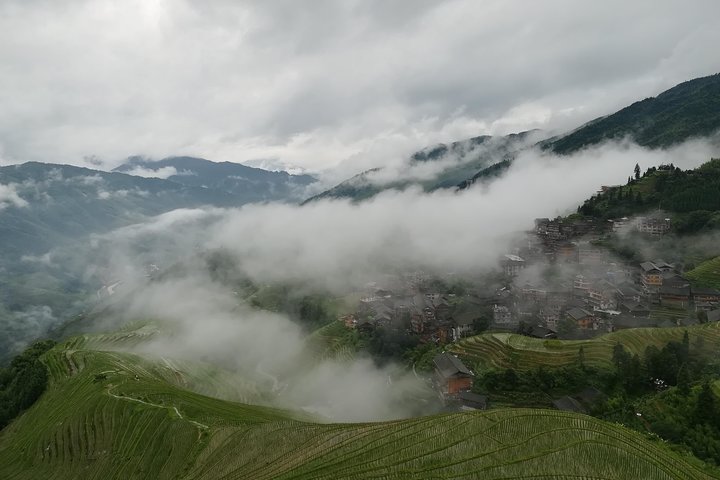
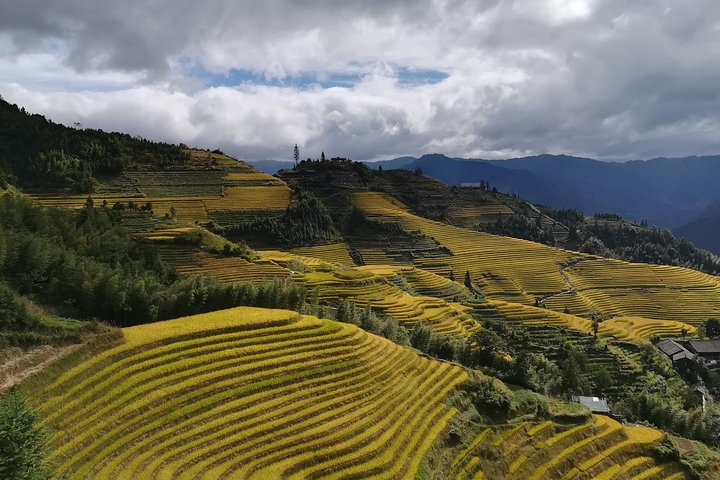
After a delightful lunch of local mountain specialties, I continued my journey to Ping’an Village. This 600-year-old settlement, perched on the hillsides, offered a breathtaking view of the cascading rice paddies. Walking along the ancient stone paths, I felt a deep connection to the land and its people. The iconic viewpoints, such as the “Seven Stars with the Moon,” provided a bird’s-eye view of the terraces, their curves resembling the scales of a dragon.
The experience was both humbling and awe-inspiring. It was a reminder of the harmony between humans and nature, a theme that resonates deeply with my own cultural background. The dedication and craftsmanship of the local farmers, who have hand-carved this landscape over centuries, was evident in every terrace. It was a perfect spot for photography, capturing the essence of this timeless tradition.
Reflecting on the Journey Back to Guilin
As the day drew to a close, I found myself reflecting on the journey back to Guilin. The Longji Rice Terraces had offered more than just stunning vistas; they had provided a window into a world where tradition and nature coexist in perfect harmony. The return journey was a time for contemplation, as the sun set over the mountains, casting a golden glow over the landscape.
This experience was a poignant reminder of the beauty and diversity of Asian cultures, something I have dedicated my life to exploring and sharing with others. The Longji Rice Terraces are not just a destination; they are a testament to the enduring spirit of the Yao and Zhuang people, and a symbol of the rich cultural tapestry that defines this region. If you ever find yourself in Guilin, I highly recommend embarking on this journey. It’s an experience that will stay with you long after you leave, much like the memories of Guilin and Yangshuo that continue to inspire me.