Exploring Istanbul’s Timeless Tapestry: A Historian’s Journey
Drawn by the allure of Istanbul’s rich history, I embarked on the Istanbul Odyssey tour, eager to explore the remnants of the Byzantine and Ottoman empires. This journey promised a deep dive into the architectural and cultural wonders that define this iconic city.


A Journey Through Time: The Hippodrome and Beyond
As a former professor of European history, I have always been fascinated by the intricate tapestry of cultures and empires that have shaped the continent. My recent journey to Istanbul, specifically the Istanbul Odyssey tour, was a remarkable experience that brought the past to life in vivid detail. The tour began at the Hippodrome, a site that once echoed with the cheers of thousands as chariots raced around its track. Though much of the original structure has faded into history, the remaining monuments, such as the Obelisk of Theodosius and the Serpent Column, stand as silent witnesses to the grandeur of the Byzantine Empire.
Walking through Sultanahmet Square, I could almost hear the distant roar of the crowds and feel the political tension that once permeated this space. The Hippodrome was not just a place of entertainment but a hub of social and political life, where emperors and commoners alike gathered. The historical significance of this site is palpable, and it set the tone for the rest of the tour.
Architectural Marvels: Hagia Sophia and the Blue Mosque
The next stop on our journey was the Hagia Sophia, a structure that has stood the test of time and witnessed the ebb and flow of empires. Built in the 6th century, its massive dome and intricate mosaics are a testament to the architectural genius of the Byzantine era. As I stood beneath its soaring arches, I was struck by the harmonious blend of Christian and Islamic art, a reflection of Istanbul’s unique position at the crossroads of cultures.
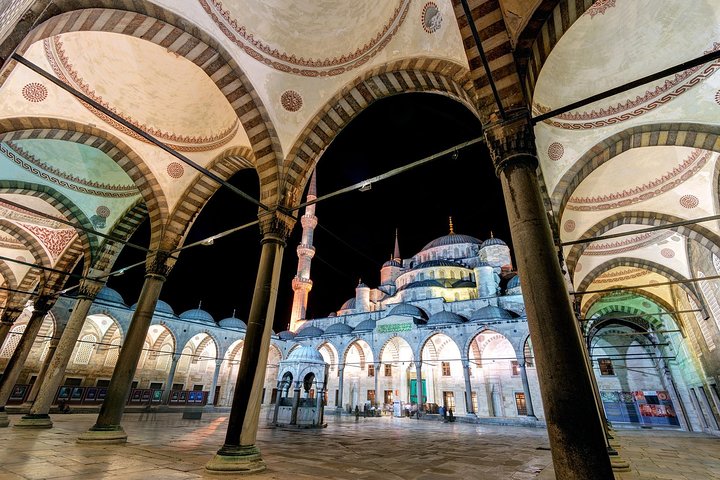
Nearby, the Blue Mosque, with its six minarets and stunning interior of blue Iznik tiles, offered a different yet equally captivating experience. Built in the early 17th century, it remains a symbol of Ottoman architectural prowess. The serene atmosphere inside the mosque provided a moment of reflection amidst the bustling city, a reminder of the spiritual and cultural richness that defines Istanbul.
The Grandeur of Topkapi Palace and the Bustle of the Grand Bazaar
Our exploration continued at Topkapi Palace, the heart of the Ottoman Empire for nearly four centuries. The palace’s sprawling courtyards and opulent rooms, including the Harem and the Treasury, offered a glimpse into the lives of the sultans and their courts. The view from the palace, overlooking the Bosporus and the Golden Horn, was nothing short of breathtaking, a fitting backdrop for the seat of such a powerful empire.
The tour concluded at the Grand Bazaar, a vibrant maze of shops and stalls that has been a center of commerce since the 15th century. As I wandered through its bustling alleys, I was reminded of the city’s enduring role as a bridge between East and West. The bazaar’s lively atmosphere, with its colorful displays of textiles, jewelry, and spices, was a feast for the senses and a fitting end to a day steeped in history.
This journey through Istanbul was more than just a tour; it was an odyssey through time, a chance to walk in the footsteps of emperors and sultans, and to experience the rich tapestry of cultures that have shaped this remarkable city. For anyone with a passion for history and architecture, the Istanbul Odyssey tour is an experience not to be missed.