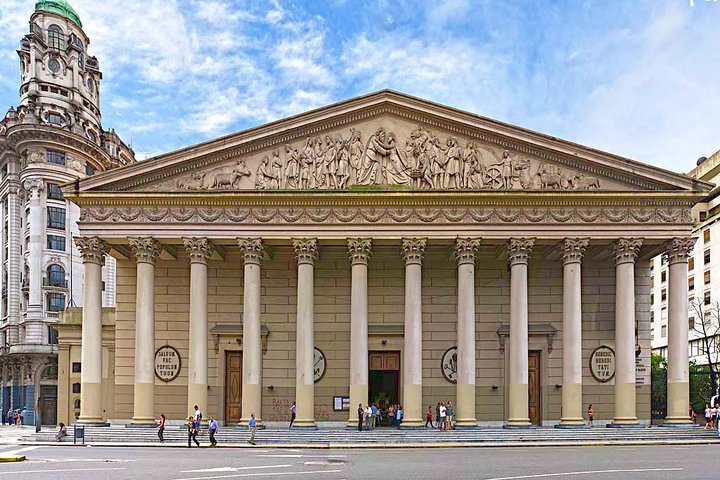
Exploring San Telmo: A Journey Through Buenos Aires’ Historic Heart
Drawn by the allure of Buenos Aires’ rich history and vibrant culture, I embarked on a journey through the historic neighborhood of San Telmo. Join me as I explore its cobblestone streets, bustling markets, and the lively Sunday fair, uncovering the stories that make this place a cultural gem.


A Stroll Through Time: The Heartbeat of San Telmo
Buenos Aires, a city that dances to the rhythm of tango and whispers tales of its storied past, beckoned me once again. This time, my journey led me to the historic neighborhood of San Telmo, a place where cobblestone streets echo with the footsteps of history. As a cultural anthropologist, I am always drawn to places where the past and present intertwine, and San Telmo promised just that.
Our guide, Matias, a history professor with a passion for storytelling, led us through the neighborhood’s oldest streets. His knowledge was profound, and his enthusiasm infectious. We began at the Iglesia de San Ignacio de Loyola, where the Jesuits laid the foundation of the city. The church stood as a testament to the colonial era, its walls whispering stories of the city’s birth.
As we walked, Matias painted vivid pictures of the past, from the British invasions to the creation of Argentina’s national identity. At the Convento Santo Domingo, we stood before the grave of the creator of the Argentine flag, a moment that resonated deeply with me. The history of the flag, its colors, and its symbolism were brought to life through Matias’s words, leaving an indelible mark on my understanding of Argentine heritage.
The Vibrant Tapestry of San Telmo
San Telmo is not just a place of history; it is a living, breathing tapestry of culture. As we continued our journey, we found ourselves on the Paseo de la Historieta, the “walk of the comic strip.” Here, the streets were adorned with charming characters from Argentine comics, including the beloved Mafalda. This whimsical touch added a layer of cultural richness to our exploration, a reminder of the playful spirit that permeates Argentine culture.
The highlight of our tour was undoubtedly the Mercado de San Telmo. This bustling market, with its vibrant stalls and tantalizing aromas, was a feast for the senses. Matias shared the market’s history, its evolution from a simple food market to a cultural hub. As we wandered through the aisles, I was struck by the diversity of offerings, from fresh produce to artisanal crafts. It was a microcosm of Buenos Aires itself, a blend of tradition and modernity.
Our tour concluded near the market, but the experience lingered. The sights, sounds, and stories of San Telmo had woven themselves into the fabric of my journey, a testament to the power of cultural immersion.
A Sunday Serenade: The Feira de San Telmo
No visit to San Telmo would be complete without experiencing the Sunday street fair, the Feira de San Telmo. As the neighborhood transformed into a vibrant festival of music, art, and commerce, I found myself swept up in the energy of the crowd. The fair was a celebration of Argentine culture, a place where locals and visitors alike gathered to revel in the joy of community.
Stalls lined the streets, offering everything from handmade jewelry to vintage clothing. Musicians played lively tunes, their melodies weaving through the air like a dance. Artists displayed their works, each piece a reflection of the city’s creative spirit. It was a sensory delight, a reminder of the beauty that emerges when tradition and innovation collide.
As I wandered through the fair, I reflected on the significance of such gatherings. They are more than just markets; they are a testament to the resilience and creativity of a community. In San Telmo, I found a place where history and culture converged, a neighborhood that embraced its past while celebrating its present.
My journey through San Telmo was a profound experience, one that deepened my appreciation for the rich tapestry of Argentine culture. It was a reminder that in every corner of the world, there are stories waiting to be discovered, and it is through these stories that we find our connection to the past, present, and future.