Exploring Boston’s Revolutionary Roots: A Journey Through Time
As a former professor of European history, I was drawn to the Freedom Trail Journey in Boston, eager to explore the city’s revolutionary past. Join me as I recount this immersive experience, where history comes alive through expert storytelling and intimate exploration of iconic landmarks.




A Walk Through Time: Setting the Scene
As a former professor of European history, I have always been fascinated by the intricate tapestry of events that shape our world. When I heard about the Freedom Trail Journey in Boston, I was intrigued by the promise of an immersive, chronological journey through the city’s revolutionary past. My wife and I decided to embark on this adventure, eager to explore the historical landmarks that played pivotal roles in America’s fight for independence.
Our journey began at Boston City Hall, where our guide introduced us to the neighborhoods we would explore using original historical maps. This initial orientation was a brilliant way to set the stage, providing us with a clear picture of the city before it became the bustling metropolis it is today. As we stood at the heart of Boston, I couldn’t help but draw parallels to the ancient cities of Europe, where history is woven into the very fabric of the streets.
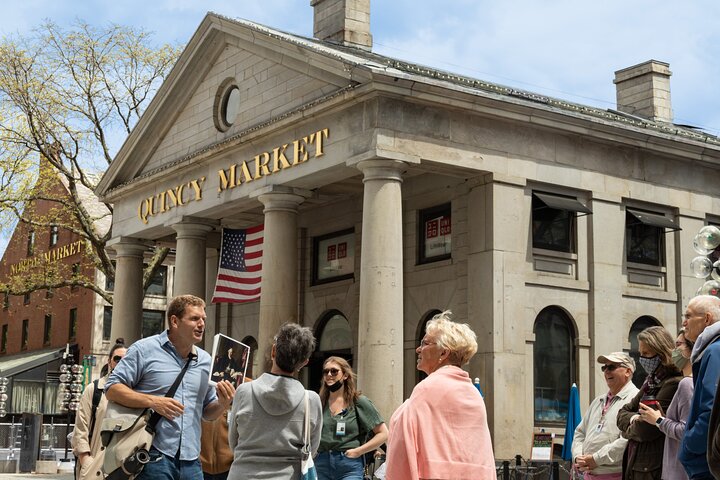
The tour’s small group size allowed for a more intimate experience, fostering easy dialogue and accommodating the needs of each participant. Our guide’s ability to field questions with ease and accuracy was impressive, reminiscent of the scholarly discussions I once led in my university days. It was clear that this was not just a job for him, but a passion.
Walking in the Footsteps of Revolutionaries
As we made our way along the iconic Freedom Trail, we visited over 14 official landmarks, each with its own story to tell. From the Granary Burying Ground, where the likes of Paul Revere and Samuel Adams rest, to the Old North Church, where the signal for Paul Revere’s midnight ride was sent, each site was brought to life through expert storytelling.
Standing at the tombs of the Sons of Liberty, I was reminded of the countless historical figures I had studied throughout my career. Our guide did a remarkable job of humanizing these legends, painting a vivid picture of their lives before history immortalized them. It was a humbling experience to walk in their footsteps, to feel the weight of their decisions and the impact they had on the world.
The tour also provided insights into the daily lives of ordinary colonists, exploring the fears and grievances that unified them against the British Empire. As we paused at the Old South Meeting House, I was struck by the parallels between the revolutionary fervor of Boston and the uprisings I had studied in Europe. The desire for self-governance and freedom is a universal theme, one that transcends time and geography.
A Living History: Modern Boston Meets Its Past
One of the most striking aspects of the Freedom Trail Journey was the seamless integration of modern Boston with its historic legacy. As we walked through the city, our guide pointed out architectural marvels like the Old State House and the Old Corner Bookstore, highlighting their significance in the context of both past and present.
The tour concluded at Lewis Wharf, in the heart of Boston’s historic North End. Here, we were encouraged to explore the local cuisine, with recommendations for the best pizza, clam chowder, and cannoli. This blend of history and modernity is something I have always cherished in my travels, whether wandering through the ancient ruins of Rome or the medieval streets of Prague.
Reflecting on our experience, I can confidently say that the Freedom Trail Journey exceeded our expectations. It was more than just a tour; it was a journey through time, a chance to connect with the past in a meaningful way. For anyone with a passion for history, or simply a desire to understand the roots of American independence, this tour is an absolute must. I find myself eager to return, to hear the stories once more and perhaps discover new nuances in the rich tapestry of Boston’s revolutionary path.


