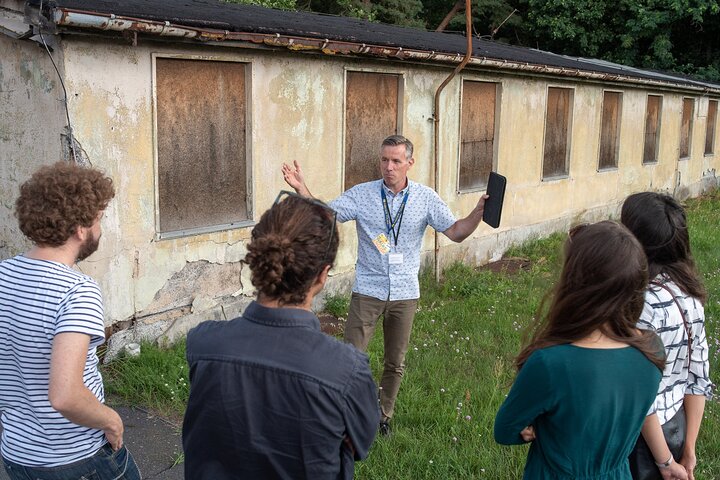
Exploring Berlin’s Layers: A Journey Through History’s Shadows
As a historian turned travel writer, I was drawn to Berlin’s rich tapestry of history. The Berlin History Tour promised a deep dive into the city’s pivotal 20th-century moments, and it did not disappoint.


A Walk Through Time: Berlin’s Historical Tapestry
Berlin, a city that has been at the heart of some of the most pivotal moments in modern history, offers a unique opportunity to walk through its past. On a recent visit, I embarked on the Berlin History Tour to explore the Third Reich and Cold War sites, a journey that promised to unravel the complex layers of Berlin’s 20th-century history.
From Imperial Grandeur to Nazi Shadows
The tour commenced at the Brandenburg Gate, a monument that has witnessed the ebb and flow of German history. As I stood beneath its neoclassical arches, I was reminded of its role as a symbol of both division and reunification. Our guide, Irish Paul, painted a vivid picture of the gate’s significance, setting the stage for the historical narrative that would unfold.
A short stroll led us to the Reichstag Building, where the echoes of the past reverberate through its walls. The stories of the Reichstag Fire of 1933 and the subsequent rise of Nazi power were chilling reminders of how fragile democracy can be. The building, now a symbol of Germany’s resilient democracy, stands as a testament to the nation’s ability to rebuild and renew.
The journey through the Tiergarten to the Soviet War Memorial was a poignant reminder of the Battle of Berlin. The sight of Soviet tanks and artillery, remnants of a brutal conflict, underscored the city’s wartime scars. As we passed the Victory Column, I couldn’t help but reflect on Berlin’s imperial ambitions and the grandiose visions that once shaped its destiny.
The Weight of Memory
One of the most profound moments of the tour was our visit to the Memorial to the Murdered Jews of Europe. Walking through the vast field of concrete stelae, I felt the weight of history pressing down, a stark reminder of the Holocaust’s horrors. This memorial, with its abstract design, invites reflection and introspection, allowing visitors to grapple with the enormity of the past.
Standing above the site of the Führerbunker, where Hitler spent his final days, was a surreal experience. Our guide recounted the bunker’s history and the collapse of Nazi Germany with a depth of knowledge that brought the past to life. It was a sobering moment, standing on the ground where history took such a dark turn.
The Detlev-Rohwedder-Haus, once Hermann Göring’s Air Ministry, now stands as a relic of East Germany’s founding. Its imposing architecture speaks to the era’s authoritarianism, a stark contrast to the democratic ideals that have since taken root in Berlin.
Cold War Echoes and Reunification
As we approached the Berlin Wall remains at Niederkirchnerstraße, the stories of escape attempts and the human cost of division resonated deeply. The preserved section of the Wall serves as a powerful reminder of the city’s divided past and the resilience of those who sought freedom.
The tour concluded at Checkpoint Charlie, a site synonymous with Cold War tensions. Here, the narrative of Berlin’s division and eventual reunification came full circle. The tales of the U.S. and Soviet tank standoff were a testament to the city’s strategic importance during the Cold War.
This tour was not merely a sightseeing excursion; it was a chronological journey through Berlin’s tumultuous history. In just a few hours, I gained a deeper understanding of the events that have shaped not only Berlin but also the broader European landscape. For anyone visiting Berlin, especially for the first time, this tour offers an efficient, informative, and engaging way to connect with the city’s past and appreciate its present.