Exploring Bergen: A Walk Through Time and Tradition
Drawn by Bergen’s rich history and vibrant modern life, I embarked on a walking tour that promised a journey through time. From medieval fortresses to bustling markets, the experience was a captivating blend of past and present.



A Stroll Through Time: Bergen’s Historical Heart
As a former professor of European history, I have always been drawn to cities that offer a rich tapestry of the past interwoven with the present. Bergen, Norway, with its storied past and vibrant modern life, was a destination I had long yearned to explore. The Bergen Walking Tour promised a journey through history and modern life, and it did not disappoint.
Our tour began at the Rosenkrantz Tower, a part of the Bergen Fortress complex. This medieval stronghold was once the seat of power when Bergen served as the capital of Norway. As we wandered through the fortress, our guide painted vivid pictures of the past, recounting tales of kings and battles that shaped the region. The fortress, with its stone walls and commanding views, was a fitting introduction to Bergen’s historical significance.
Next, we made our way to Håkon’s Hall, a surviving remnant of the medieval palace. Though we did not enter, the exterior alone spoke volumes of Bergen’s time as an independent kingdom and its subsequent unions with Denmark and Sweden. The architecture, a testament to the city’s resilience, stood as a silent witness to centuries of change.
Bryggen: A Living Heritage
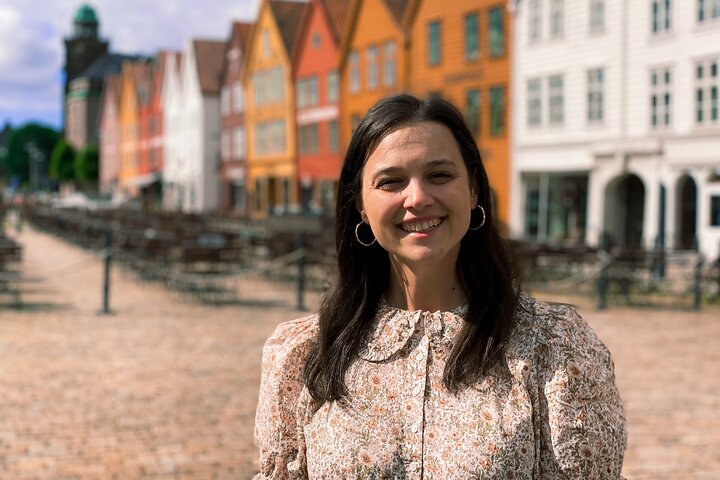
Our journey continued to Bryggen, Bergen’s UNESCO World Heritage site. This historic wharf, with its colorful wooden buildings, has been a hub of trade for over a thousand years. As we strolled through the narrow alleyways, I couldn’t help but imagine the bustling activity of merchants from the Hanseatic League, who once dominated trade in the region.
The guide shared fascinating insights into the Hanseatic League’s trading methods and the economic forces that led to Bergen’s growth. The juxtaposition of ancient trade practices with the modern shops and galleries that now occupy these buildings was a reminder of how history continues to shape the present.
St. Mary’s Church, the oldest building in Bergen, was our next stop. Constructed in the 12th century, this church has withstood the test of time, much like the city itself. Though we did not enter, the Romanesque architecture and the stories of its past were enough to captivate my imagination.
Modern Bergen: A Blend of Tradition and Innovation
Leaving the historical heart behind, we ventured into the neighborhoods surrounding Bryggen. Here, the tour took on a more contemporary tone, exploring the everyday life of Bergen’s residents. We wandered through Steinkjellerbakken, a district known for its well-preserved wooden houses, and discussed the nuances of Norwegian life, from housing costs to culinary traditions.
Our guide’s personal anecdotes added a layer of authenticity to the experience, offering a glimpse into the lives of those who call Bergen home. We passed by the funicular station, a nod to Bergen’s outdoor culture and the importance of hiking in Norwegian life. Though we did not take the ride, the mention of Mount Fløyen brought back memories of my own family’s adventures in the area.
The tour concluded at the bustling Fish Market, a fitting end to a journey that seamlessly blended history with modernity. As I savored the fresh seafood, I reflected on the day’s experiences. Bergen, with its rich history and vibrant present, had left an indelible mark on my heart. This walking tour was not just a journey through the city; it was a journey through time, a reminder of the enduring legacy of the past and the ever-evolving nature of life.


