Embark on an 8-day vacation in Lebanon and explore its historical sites, from the captivating landscapes of Wadi Qadisha to the ancient ruins of Baalbek and Tyre. Discover the mesmerizing Jeita Grotto and experience the vibrant city of Beirut.
Embark on an 8-day vacation in Lebanon and explore its historical sites, from the captivating landscapes of Wadi Qadisha to the ancient ruins of Baalbek and Tyre. Discover the mesmerizing Jeita Grotto and experience the vibrant city of Beirut.
Arrival Day: Airport Transfer
Beirut International Airport - Welcome to Beirut! A professional driver will transport you to your hotel in the city. Take this time to unwind and prepare for your exciting tour the following day!
Jeita Grotto, Harissa & Byblos
Jeita Grotto - The Jeita Grotto is a remarkable system of two interconnected…
Arrival Day: Airport Transfer
Beirut International Airport - Welcome to Beirut! A professional driver will transport you to your hotel in the city. Take this time to unwind and prepare for your exciting tour the following day!
Jeita Grotto, Harissa & Byblos
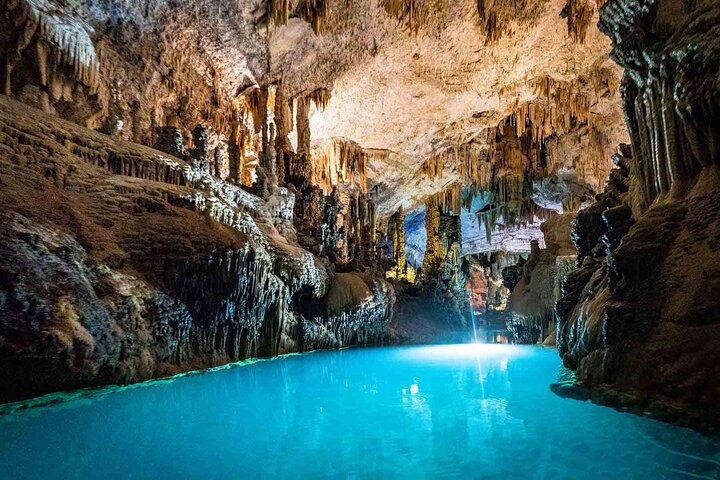
Jeita Grotto - The Jeita Grotto is a remarkable system of two interconnected karstic limestone caves, formed over millions of years, and is the longest cave complex in the Middle East. Situated 300 meters above sea level, it boasts a height difference of 305 meters. The upper cave stretches 2,130 meters and features a stunning array of crystallized formations, including stalactites, stalagmites, columns, mushrooms, ponds, curtains, and draperies. The lower gallery, 6,200 meters long, lies 60 meters below the upper gallery and is traversed by a serene underwater river and lake.
The Shrine of Our Lady of Lebanon - Located in Harissa, this shrine is one of the world’s most significant sites honoring the Virgin Mary. It features a massive 15-ton bronze statue of the Immaculate Conception, standing 8.5 meters high with a diameter of five meters. The Virgin Mary extends her arms towards Beirut, offering one of the world’s most breathtaking panoramic views over the Bay of Jounieh.
Churches of Harissa - Harissa is a prominent Christian pilgrimage site, home to the shrine dedicated to Our Lady of Lebanon. The site features a large 15-ton bronze statue of the Virgin Mary, known as Our Lady of Lebanon or Notre Dame du Liban, with her arms outstretched. The statue, inaugurated in 1908, contains a small chapel at its base. Nearby, a grand cathedral made of concrete and glass stands adjacent to the statue. Other churches in the area include the Byzantine-style Melkite Greek Catholic basilica of St. Paul, built between 1948 and 1998, the Apostolic Nunciature (Papal Embassy), and the residences of four patriarchs of Eastern Catholic Churches.
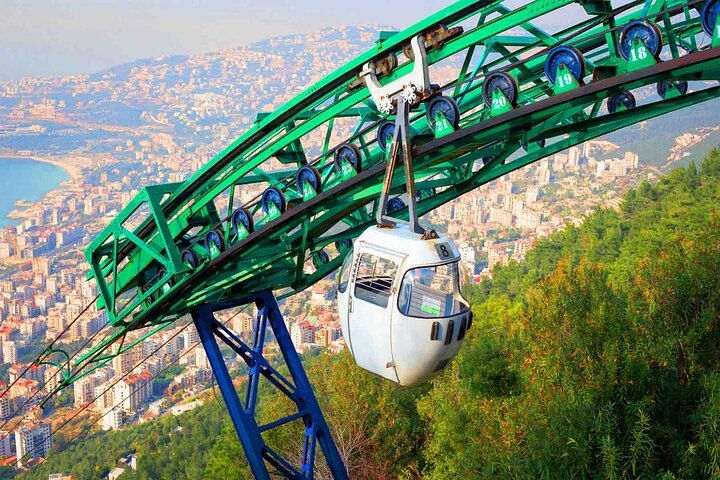
Téléferique Harissa - The Telepherique is one of Lebanon’s oldest and most popular tourist attractions. This gondola lift system, located in Jounieh, 16 km north of Beirut, transports passengers over pine-forested mountains to an altitude of 650 meters, arriving at the Our Lady of Lebanon shrine in Harissa. It offers breathtaking views of the Bay of Jounieh and the surrounding city.
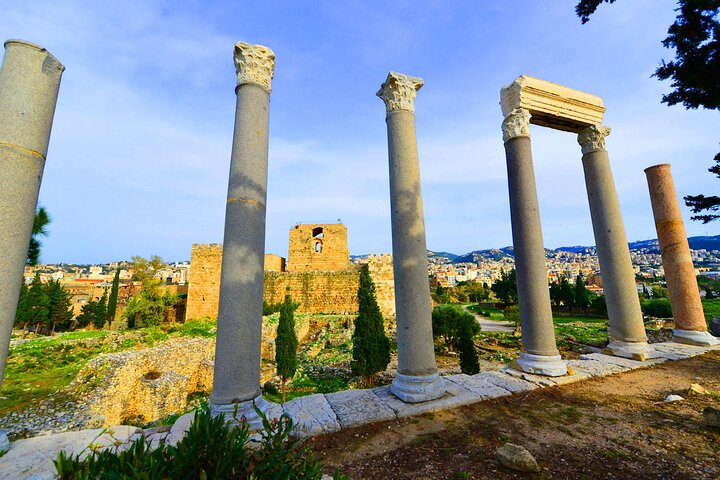
Byblos - Byblos is one of the oldest Phoenician cities, inhabited since Neolithic times. It has been closely linked to the legends and history of the Mediterranean region for thousands of years and is directly associated with the history and spread of the Phoenician alphabet.
Byblos Castle - Byblos Castle is a restored 12th-century Crusader castle surrounded by a 10-meter-wide dry moat. Located within Byblos’ atmospheric archaeological site, it contains the ruins of the Temple of Baalat Gebal and the Temple of the Obelisks. The castle offers an impressive view over the ruins from its foursquare keep. Below the walls, a series of Bronze Age dwellings is visible as you look towards the sea. Inside the castle, there’s a small museum and a room with information panels outlining the city’s history.
Old Souk - Byblos’ old souk is a charming market where visitors can shop for souvenirs and antiques or simply stroll along the cobblestone streets and admire the architecture.
Byblos Port - Byblos Port is an ancient port believed by the Lebanese to be the oldest in the world. Around 3000 BC, it was the most important timber shipping center in the eastern Mediterranean.
Baalbek, Anjar & Chateau Ksara
Baalbek - Baalbek is home to the Baalbek temple complex, which includes two of the largest and grandest Roman temple ruins: the Temple of Bacchus and the Temple of Jupiter. It was inscribed as a UNESCO World Heritage site in 1984. This Phoenician city, known as Heliopolis during the Hellenistic period, retained its religious significance during Roman times, attracting thousands of pilgrims to the sanctuary of the Heliopolitan Jupiter. Baalbek’s colossal structures are among the finest examples of Imperial Roman architecture.
Temples of Baalbek - The temple complex at Baalbek is located at the foot of the southwest slope of Anti-Lebanon, bordering the fertile Bekaa plain at an altitude of 1150 meters. The city reached its peak during Roman times, with its colossal constructions built over more than two centuries, making it one of the most famous sanctuaries of the Roman world and a model of Imperial Roman architecture. Pilgrims flocked to the sanctuary to venerate the Romanized Triad of Heliopolis, an essentially Phoenician cult (Jupiter, Venus, and Bacchus).
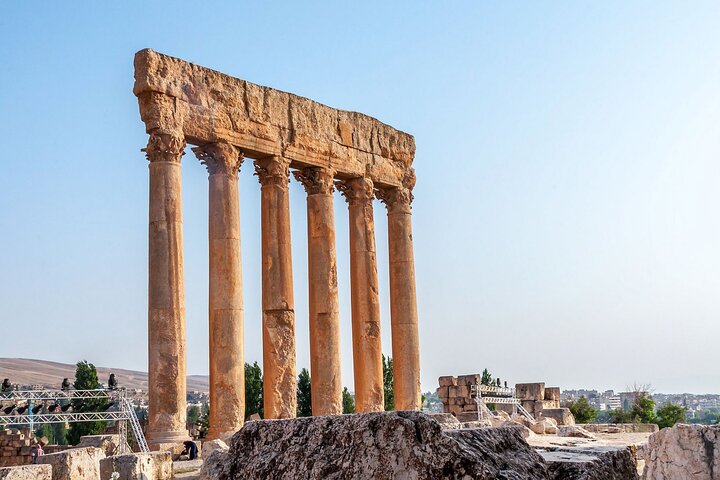
Temple of Jupiter - The Temple of Jupiter is a colossal Roman temple, the largest in the Roman world, located at the Baalbek complex in Heliopolis. Dedicated to Jupiter Heliopolitanus, it served as an oracle. Construction likely began around 16 BC and was nearly complete by AD 60. Situated at the western end of the Great Court of Roman Heliopolis, it stands on a broad stone platform raised 7 meters above the foundation’s massive stones, three of which are among the heaviest blocks ever used in construction. It was the largest temple dedicated to Jupiter in the Roman Empire, with columns 30 meters high and nearly 2.5 meters in diameter, the largest in the classical world. The temple complex took three centuries to complete.
Temple of Bacchus - Part of the Baalbek temple complex in the Bekaa Valley, Lebanon, the Temple of Bacchus is considered an outstanding archaeological and artistic site of Imperial Roman Architecture and was inscribed as a UNESCO World Heritage site in 1984. It is one of the best-preserved and grandest Roman temple ruins, with its fine ornamentation dating to the second century CE.
Temple of Venus - Built in the third century, the Temple of Venus features a circular shrine on a horseshoe-shaped platform with a square entrance. The outer façade is adorned with five niches, each with representations of doves and shells, suggesting the shrine was dedicated to Venus.
Sayyida Khawla Shrine - The Mosque of Sayyida Khawla in Baalbek, Lebanon, is believed to be the burial site of Sayyida Khawla, the daughter of Imam al-Hussein, the grandson of the Prophet Muhammad. Locals believe that when the caravan of Karbala captives passed through Baalbek, Khawla passed away and was buried there.
Stone of the Pregnant Woman - The Stone of the Pregnant Woman is a Roman monolith in Baalbek, Lebanon. Along with another ancient stone block nearby, it is among the largest monoliths ever quarried. These massive building blocks were likely intended for the nearby Roman temple complex and are characterized by their unparalleled monolithic gigantism.
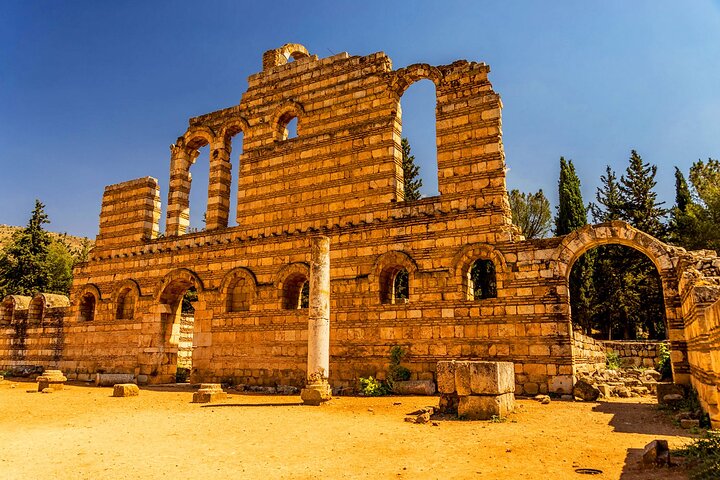
Anjar - Founded by Caliph Walid I at the beginning of the 8th century, Anjar’s ruins reveal a very regular layout reminiscent of ancient palace-cities, offering a unique testimony to city planning under the Umayyads.
Umayyad Ruins of Aanjar - The Umayyad Ruins of Aanjar provide outstanding evidence of the Umayyad civilization and serve as a prime example of an inland commercial center at the crossroads of two important routes: one from Beirut to Damascus and the other crossing the Bekaa from Homs to Tiberiade. Discovered by archaeologists in the late 1940s, the ruins include the walls of the Umayyad palace, harems, a mosque, the great palace of the Caliph, thermal baths, and many pillars featuring Roman architectural elements.
Chateau Ksara - Château Ksara is a renowned wine company in the Beqaa Valley, Lebanon. Founded in 1857 by Jesuit priests, it developed Lebanon’s first dry wine. Château Ksara produces approximately 3 million bottles annually, exporting its wines to over 40 countries.
Qadisha Valley, Bcharre, and Cedars of God
Qadisha Valley - The Qadisha Valley is one of the most significant settlement sites for the first Christian monasteries in the world. Its monasteries, many of which are ancient, are set in an extraordinarily rugged landscape. The valley encompasses all the caves, monasteries, and cultivated terraces associated with early Christian activities.
Greater Bcharre - Bcharre is home to the only remaining and preserved original Cedars of God and is the birthplace of the famous poet, painter, and sculptor Khalil Gibran, who now has a museum in the town. Bcharre also boasts the oldest skiing area, the Cedars Ski Resort, and Lebanon’s first ski lift, built in 1953. Often called “the city of churches,” Bcharre houses around 37 churches.
Gibran Museum - The Gibran Museum, formerly the Monastery of Mar Sarkis, is a biographical museum in Bcharre, Lebanon, dedicated to the Lebanese writer, philosopher, and artist Kahlil Gibran. Founded in 1935, the museum holds 440 original paintings and drawings by Gibran, as well as his tomb, furniture, belongings from his New York City studio, and private manuscripts.
The Cedars of God - The Forest of the Cedars of God, with its 375 trees, is the last remnant of ancient forests and one of the rare sites where Cedars still grow. Highly prized in ancient times, cedar wood was a valued construction material for great religious buildings and is mentioned 103 times in the Bible. The Cedar is a national symbol, proudly featured on the Lebanese flag.
Deir Qozhaya - The Monastery of Saint Anthony the Great is located at 950 meters above sea level in the celebrated Valley of Qozhaya. Surrounded by pine and oak trees, the valley is rich with fruit trees and extends into the Valley of Qannubin, forming the great Qadisha Valley. This area bears witness to the history of eremitic life and the quest for holiness in Lebanon. Historians believe the monastery was first built and occupied by hermits in the early fourth century. Despite being looted, set on fire, and razed multiple times, remnants dating back to the seventh century remain.
Sidon, Tyre, and Maghdouche
Sidon - Sidon, one of the oldest Phoenician cities, was founded in the 3rd millennium BC and flourished in the 2nd millennium BC. Known for its purple dyes and glassware, Sidon was visited by Jesus. During the Crusades, it changed hands several times and was destroyed and rebuilt.
Khan al-Franj - Khan al-Franj is a major attraction in Sidon, built in the early 17th century by Emir Fakhreddine II as a hotel for ambassadors and a center for commercial exchange between Lebanon and France. It quickly became a hub for literature, religion, history, industry, and diplomacy, serving as a cultural and civilizational center. The khan features a large rectangular courtyard with a central fountain surrounded by covered galleries.
Soap Museum - Saida - The Soap Museum in Sidon specializes in Levantine soaps. Originally built by the Hammoud family in the 17th century, the museum traces the history of soap making in the region, its development, and manufacturing techniques. Visitors can watch demonstrations of traditional olive oil soap making and learn about the history of “hammam” (bath) traditions. The museum also displays artifacts found during onsite excavations, including clay pipe heads from the 17th to 19th centuries and pottery fragments. The museum building, an old soap factory, dates back to the 17th century, with parts believed to be from the 13th century.
Debbane Palace - Built in the Old City of Sidon in the 18th century, the Debbane Palace is the last remaining house from the Ottoman period in a city now dominated by traffic and glass storefronts. Accessed via a narrow stairwell in the crowded Souq, the palace is literally built atop the markets below. Inside, it features reception rooms, stained-glass windows, rare mosaic tiles, and centuries-old stables. The Debbane Palace is the only example of an Ottoman palace within the city walls of urban Lebanon.
Basilica of Our Lady of Mantara - بازيليك سيدة المنطرة - Our Lady of Awaiting, also known as Our Lady of Mantara, is a Melkite Greek Catholic shrine in Maghdouché, Lebanon, discovered on September 8, 1721, by a young shepherd. The shrine includes a tower crowned with a statue of the Virgin and Child, a cathedral, a cemetery, and a sacred cave believed to be where the Virgin Mary rested while waiting for Jesus.
Tyre - Tyre is an ancient Phoenician port city and the birthplace of Elissar, the Phoenician princess who founded Carthage. Renowned for its purple dye made from murex sea snails, Tyre boasts two main archaeological sites, “Al-Bass” and “Al-Mina,” which testify to its historical significance. With a beautiful seaside location, Tyre is a popular holiday destination with excellent, clean beaches. The town’s foundations date back to around 2750 BC, and it has been ruled by Egyptians, King Hiram, Assyrians, Neo-Babylonians, Greeks, Seleucids, Romans, Byzantines, Arabs, Crusaders, Mamluks, and Ottomans.
Al-Bass Archaeological Site - The Al Bass Archaeological Site is the largest and best-preserved example of a Roman Hippodrome. The sector of Tyre El Bass, the principal entrance to the town in ancient times, includes the remains of a necropolis on either side of a wide monumental causeway dominated by a Roman triumphal arch from the 2nd century AD. Other vestiges include an aqueduct and the 2nd-century hippodrome, one of the largest in the Roman world. The site contains a necropolis with several hundred well-preserved sarcophagi, an intact Roman road, an aqueduct, and a monumental arch.
Tyre Hippodrome - The Tyre Hippodrome is a UNESCO World Heritage site in the city of Tyre, south Lebanon, dating back to the second century AD. It is considered one of the largest and best-preserved Roman hippodromes of its kind in the Roman world.
Ruins of Tyre: The Egyptian Port - Discovered in 1962, the necropolis consists of hundreds of stone and marble sarcophagi from the Roman and Byzantine eras. Some have Greek inscriptions or the names of those buried there, or their trade, such as “wealthy purple dye manufacturer.” Others feature frescoes and bas-reliefs of works from Homer and others.
Ruins of Tyre: The Egyptian Port - Tyre once had two harbors: the Sidonian in the north and the Egyptian harbor in the south. Today, the port of Tyre is a bustling fisherman’s port, and the remains of a 750-meter-long mole can still be seen. It’s easy to recognize the remains of some ancient buildings in the water.
Beirut, Beiteddine, and Deir El Qamar
Pigeon Rocks in Raouche - The Pigeon Rocks are a stunning set of rock formations and a popular tourist destination known for their iconic shapes in picturesque seaside surroundings. Located at Beirut’s westernmost tip, the two massive rock formations stand like gigantic sentinels to the city.
Manara - Stretching from the Ramlet al Bayda area to the Saint George marina, Al Manara Corniche is Beirut’s most renowned seaside promenade. Lined with palm trees, it offers a great view of the Mediterranean Sea, as well as some of the country’s best assets, including the famous Pigeon Rock and the summits of Mount Lebanon on the eastern side.
Zaitunay Bay - Described as “Beirut’s finest leisure destination,” Zaitunay Bay is a new waterfront promenade featuring shops and restaurants.
Holiday Inn Hotel - This abandoned Holiday Inn Hotel is one of Beirut’s war landmarks. Built between 1971 and 1974 during Beirut’s economic boom, it was one of the most visited tourist cities in the Middle East. The Holiday Inn operated until the Lebanese civil war began in 1975. The hotel soon became a “war zone” during the “Battle of the Hotels,” where over 25,000 combatants fought for control over various luxury hotels, including the Holiday Inn and the famous Phoenicia hotel. The hotel remains untouched, abandoned, and empty decades after the war, serving as a reminder of the horrors of war to the Lebanese population.
Mohammad Al-Amin Mosque - The Mohammad Al-Amin Mosque, also known as the Blue Mosque, is the largest mosque in Lebanon, located in downtown Beirut. This grand amber-colored mosque near Martyrs’ Square was opened in 2008 and features four minarets standing 65 meters high. The mosque’s domes are made from light blue tiles, and it also has multiple arches, each a couple of stories high.
Al-Omari Mosque - The Al-Omari Grand Mosque was built during the age of Omar Bin El Khattab in 635 AD and later converted to the Church of Saint John by the Crusaders in the 12th century. It was transformed back into the city’s Grand Mosque by the Mamluks in 1291. Damaged during the Civil War, the mosque’s refurbishment was completed in 2004.
Greek Orthodox Cathedral of Saint George - The Greek Orthodox Cathedral of Saint George is the seat of the Greek Orthodox Metropolitan bishop of the Greek Orthodox Archdiocese of Beirut and its dependencies. It is the oldest church in Beirut and one of the oldest in the region, located in the heart of Beirut’s city center. The first Christian temple built on this site dates back to the mid-sixth century AD and is closely associated with Beirut’s famous Law School.
Martyr’s Square - Martyrs’ Square is a central square in downtown Beirut, historically known as “Al Burj” or “Place des Cannons.” It is named after the 6 May 1916 executions of Lebanese nationalists by the Ottomans, ordered by Jamal Pasha during World War I.
Place de l’Etoile - Nejme Square, or Place de l’Étoile, is the central square in the Downtown area. It houses the Lebanese Parliament and its complementary buildings, two cathedrals, a museum, and several cafes and restaurants. Notable for its 1930 four-faced Rolex clock and architecture, the square has become a recognizable icon of Beirut City worldwide.
Beirut Souks - Beirut Souks is a commercial district in Beirut City Center, featuring over 200 shops, 25 restaurants and cafes, an entertainment center, and a cinema complex. It is the largest and most diverse shopping and leisure area in Beirut.
Roman Baths - The Roman Berytus baths are the largest outdoor site located in downtown Beirut. Discovered in 1968-1969, they underwent major renovation in the mid-1990s. Roman Berytus had four major bath complexes, with the first created in the early first century under Augustus. The devastating Berytus earthquake in 551 AD destroyed all the baths. Today, the Roman Berytus Baths reflect the ancient traditions of the site, with one bath used as an artistic performance and concert space.
Beiteddine Palace - Beiteddine Palace, or ‘House of Faith,’ is a 19th-century palace in Beiteddine, Lebanon. It hosts the annual Beiteddine Festival and the Beiteddine Palace Museum. Emir Bashir Chehab II, who later became the ruler of the Mount Lebanon Emirate, built the palace between 1788 and 1818. After 1840, the palace was used by the Ottomans as a government building. During the French Mandate, it served as a local administrative office. In 1943, the palace was declared the president’s official summer residence. Heavily damaged during the Lebanese Civil War, parts of the palace are now open to the public, while the rest remains the president’s summer residence.
Fakhreddine’s Mosque - Fakhreddine Mosque, with its octagonal minaret, is located in Deir el Qamar, Lebanon. Built in 1493 and restored in the 16th century by Fakhreddine I, it is the oldest mosque in Mount Lebanon.
Saydet El Talle Church - The Church of Saidet et Tallé, translated as Our Lady of the Hill, is one of the most important historical and religious sites in Deir el Qamar, dating to the 15th century. Monk Nicolas Smisaati built a church on the site over the ruins of an old Phoenician temple dedicated to the goddess Astarte, which was later destroyed by an earthquake in 859. According to the Maronite Heritage website, “the legend says that there was a Druze Emir in Baakline looking at the hill of Dar El Kamar. He saw a light coming out of the hill, so he gathered his soldiers and ordered them to go in the morning and dig in the land. He said to them: ‘If you find an Islamic symbol, build a mosque. If you find a Christian symbol, build a church.’ In the morning, the soldiers went and found a rock with a cross on it, and under the cross, there was the moon and Venus. That was the sign that in the distant past, there was a temple dedicated to the moon and Venus, and later it became a church.”
Free Day in Beirut
Beirut - Enjoy a free day at your own pace. You can shop for souvenirs for your loved ones, explore Beirut city on your own, or simply relax at your hotel until your departure the next day.
Departure Day: Airport Transfer
Beirut - Prepare yourself and your luggage to leave Lebanon after enjoying the three-day holiday package. We hope you will visit again and look forward to welcoming you back to Lebanon!
Beirut International Airport - After checking out of your hotel in Beirut, our representative will be waiting to transfer you to Beirut Airport 2-3 hours before your flight departure. We wish you a pleasant journey and a safe flight.

- Accommodation for 7 Nights in Beirut city hotel
- Breakfast
- Lunch
- Hotel Pick up & Drop off
- Round Trip Airport Transfers
- Joining other 5 Small Group Tours
- Accommodation for 7 Nights in Beirut city hotel
- Breakfast
- Lunch
- Hotel Pick up & Drop off
- Round Trip Airport Transfers
- Joining other 5 Small Group Tours
- Dinner
- Personal Expenses
- Dinner
- Personal Expenses
Make your mark on the itineraries of Lebanon’s top attractions await with their enchanting beauty in this 7-night holiday package from Beirut. Enjoy the landscapes of Wadi Qadisha, an alluring little village in North Lebanon, frequented by travelers from all over the map and offering eye-opening vistas that will leave you mesmerized by its captivating…
Make your mark on the itineraries of Lebanon’s top attractions await with their enchanting beauty in this 7-night holiday package from Beirut. Enjoy the landscapes of Wadi Qadisha, an alluring little village in North Lebanon, frequented by travelers from all over the map and offering eye-opening vistas that will leave you mesmerized by its captivating beauty. Discover the ruins of Baalbek and Tyre, fascinating archaeological sites dating back to the Roman civilization and the most visited sites in Lebanon. Discover the Jeita Grotto, an amazing natural cave known as the jewel of tourism in Lebanon and immerse yourself in the magnificent stalactites. And don’t miss the ‘Paris of the Middle East’, the capital, Beirut, a thriving district for shopping, socializing and sightseeing.
If you cancel at least 6 full day(s) before the scheduled departure time, you will receive a full refund.
If you cancel between 2 and 6 day(s) before the scheduled departure time, you will receive a 50% refund.
If you cancel within 2 day(s) of the scheduled departure, you will receive a 0% refund.
If you cancel at least 6 full day(s) before the scheduled departure time, you will receive a full refund.
If you cancel between 2 and 6 day(s) before the scheduled departure time, you will receive a 50% refund.
If you cancel within 2 day(s) of the scheduled departure, you will receive a 0% refund.